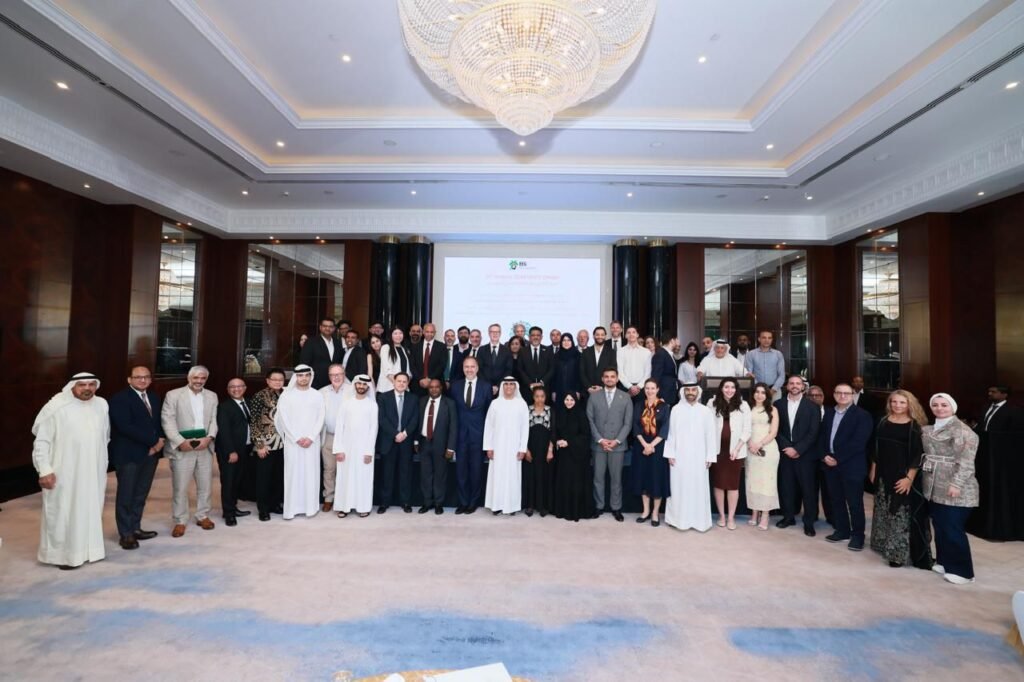
Dubai , April 3, 2026 : The Emirates Environmental Group (EEG) hosted its 29th Annual Corporate Gala Dinner, a distinguished evening dedicated to recognising sustainability leadership, strengthening partnerships and reaffirming the UAE’s steadfast commitment to environmental progress. Held under the gracious patronage of His Highness Engr. Sheikh Salim Bin Sultan Bin Saqr Al Qasimi, Chairman of Ras Al Khaimah Civil Aviation and Member of the Executive Council of the Government of Ras Al Khaimah, the event convened high-level dignitaries, members of the diplomatic corps, corporate executives, policymakers and sustainability advocates from across the region.
This year’s gathering took place at a time when parts of the Middle East are navigating geopolitical tensions, underscoring the importance of resilience, unity and responsible leadership. Against this backdrop, the Gala Dinner served as a powerful reminder that sustainability is not secondary to stability — it is foundational to it. The UAE continues to demonstrate foresight and measured leadership, maintaining its trajectory of sustainable growth while reinforcing economic diversification, climate ambition and environmental governance.
The presence of esteemed Ambassadors and Consuls General representing Europe, Asia, Africa, Central America, South America and Oceania reflected the international dimension of the UAE’s sustainability journey and highlighted EEG’s growing role in bridging local impact with global environmental dialogue.
The evening featured H.E. Dr. Nawal Al Hosany, Permanent Representative of the UAE to the International Renewable Energy Agency (IRENA), as the keynote speaker, where she delivered an inspiring address highlighting the UAE’s leadership in advancing climate action and sustainable development.
Under the theme “Rooted Together: Partnerships Sustaining a Greener Tomorrow,” the evening emphasised the collective responsibility required to address climate change, resource management and sustainable development. In her keynote address, Dr. Habiba Al Mar’ashi, Co-Founder and Chairperson of EEG, underscored that sustainability today is no longer a peripheral agenda but a strategic necessity for national resilience, economic competitiveness and social cohesion.
She noted that the UAE’s continued advancement of its Net Zero 2050 Strategy, circular economy frameworks and sustainable finance mechanisms reflects a national vision that integrates environmental stewardship with long-term prosperity. She further aligned EEG’s mission with the national declaration of 2026 as the Year of Family, emphasising that sustainability begins with shared values, intergenerational responsibility and collective action.
The 29th Annual Corporate Gala Dinner recognised 52 entities from across the UAE for their outstanding support and measurable contributions to EEG’s environmental programmes in 2025. These organisations represented a wide spectrum of industries including hospitality, banking, logistics, retail, education and government institutions, reinforcing that sustainability is a shared endeavour across all sectors of society.
Over the course of 2025, EEG continued to translate commitment into measurable impact. Through its nation-wide educational programmes, the organisation engaged 738,785 students across national, regional and international platforms, empowering youth to become environmental ambassadors and responsible global citizens. In the area of waste management, EEG successfully diverted 1,744,328 kilograms of recyclable materials from landfill into recycling facilities, mitigating 6,006.77 metric tonnes of carbon dioxide emissions and preserving 11,215 cubic metres of landfill space and engaging more than 2,489 entities.
EEG’s nationwide urban afforestation efforts resulted in the planting of 14,301 native trees across the Emirates in 2025, bringing the cumulative total to more than 2,155,786 trees planted since 2007. The Clean UAE Campaign mobilised over 84,123 volunteers, cleaned 98 square kilometres of land and removed 45,692 kilograms of waste from natural and public areas further embedding environmental responsibility within communities and workplaces across the country.
In her address, Dr. Al Mar’ashi highlighted the evolving role of the private sector in driving sustainable transformation. She emphasised that sustainability is increasingly integrated into corporate governance, risk management and long-term growth strategies, reflecting a shift from voluntary initiatives to structural ESG alignment. She called upon corporations, government entities and individuals to continue advancing measurable action, innovation and transparency in environmental performance.
EEG’s engagement extends beyond national initiatives, with active participation in leading international platforms including the United Nations Environment Programme, the Global Investors for Sustainable Development Alliance and the World Green Building Council. Through these collaborations, EEG continues to amplify the UAE’s constructive role in advancing global sustainability efforts and fostering cross-border cooperation.
The success of the 29th Annual Corporate Gala Dinner was made possible through the valued support of its sponsors. McDonald’s UAE served as the Platinum Sponsor, Berkeley Servicesand CARES Middle East as Silver Sponsors, Wasl as Special Sponsor, Farnek as Carbon Neutral Partner and the Arabia CSR Network as Sustainability Partner. Their continued partnership reflects the maturity and commitment of the UAE’s corporate sustainability ecosystem.
As EEG approaches three decades of environmental leadership, the organisation remains committed to strengthening partnerships, accelerating circular economy adoption and empowering communities to contribute actively to a resilient and sustainable future. The 29thAnnual Corporate Gala Dinner stood not only as a celebration of achievements, but as a renewed commitment to shaping a greener, stronger and more sustainable tomorrow for the UAE and the region.