Day: June 1, 2026

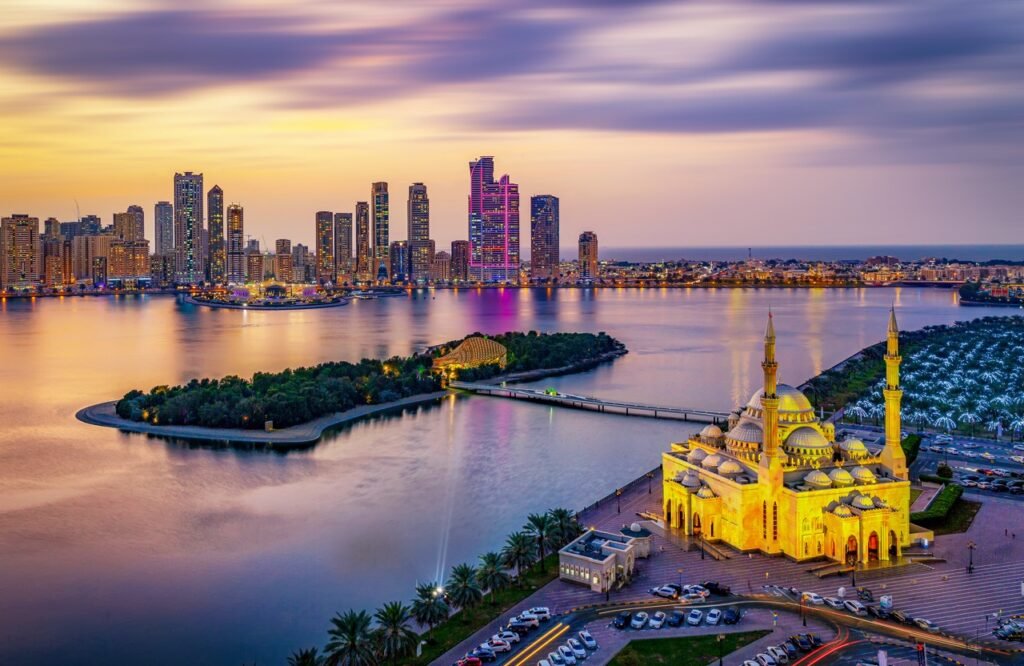
Sharjah , June 1, 2026 : The Sharjah FDI Office (Invest in Sharjah), in collaboration with PwC, convened leading public and private sector entities to assess the emirate’s investment position and identify opportunities emerging from global economic shifts.
The high-level seminar was held at Al Bait Al Westi in the historic Heart of Sharjah, and carried
the theme “Sharjah’s Economic Resilience: Unlocking Opportunities Amid Global Shifts.”
Discussions focused on strengthening cross-sector integration and reinforcing competitiveness
across an array of sectors.
Participants, who represented key sectors like aviation & logistics, real estate, manufacturing,
financial services, and hospitality, alongside representatives of government entities, business
councils, and academic institutions – also explored plausible pathways to sustain growth by
reigniting investment momentum.

A resilient economy and sustainable growth
Sharjah’s economic landscape was a central focus of the session, with discussions examining
the factors underpinning stability and continuity across its markets and free zones amid
accelerating global shifts. Participants stressed that the emirate’s economic model is anchored
in a diversified base of growth-supporting sectors, advanced infrastructure, and a stable
population that reinforces domestic demand and sustains economic activity.
The discussion also highlighted how Sharjah’s development model has translated into strong
economic performance in 2025, with foreign direct investment projects increasing by 45%,
capital investments rising by 8.8%, and employment opportunities growing by 25.7% compared
with the previous year – according to data from “fDi Markets – Financial Times”. The figures
reflect the strength of the emirate’s economic structure, the effectiveness of its supporting
policies, and Sharjah’s ability to sustain growth momentum while enhancing its investment
appeal.
High-quality opportunities and strategic partnerships
H.E. Ahmed Obaid Al Qaseer, CEO of Shurooq, said: “Sharjah has built an investment
environment that remains steady and confident in the face of global change. This strength is the
result of a clear development vision, close alignment between the public and private sectors,
and an economy shaped by diverse sectors that continue to support one another. At Shurooq,
and through Invest in Sharjah, our role is to bring these strengths together, identify where
opportunity is emerging, and convert market confidence into practical partnerships that advance
the emirate’s long-term growth.”
For his part, H.E. Mohamed Juma Al Musharrkh, CEO of “Invest in Sharjah”, said: “Markets that
sustain investment appeal and stable growth are those that build integrated economic systems
capable of absorbing change and turning it into long-term opportunity. In Sharjah, we are
focused on strengthening these connections across sectors, supporting consistent performance,
and providing investors with a well-defined and scalable environment.”
He added: “Sharjah’s strength lies in its ability to turn regional and global economic shifts into
lasting opportunities through strong institutional partnerships and efficient processes. This
reinforces its position within global value chains and enables investors to create sustainable
value beyond short-term fluctuations.”
Khaled Bin Braik, UAE Country Senior Partner at PwC, said: “Investor confidence follows
fundamentals, and Sharjah’s fundamentals are strong. A diversified economy, clear policy
direction, and real alignment between public and private sectors. At PwC Middle East, we see
this directly as businesses increasingly prioritise stability, connectivity, and long-term growth
potential. Sharjah delivers on all three and our clients are committing to it. That is the clearest
signal of confidence an economy can receive.”
Sharjah’s unique advantages amid current regional developments

The seminar highlighted Sharjah’s “unique value propositions” which present opportunities amid
current regional developments, including alternative transport modes. Khorfakkan Port, located
on the Gulf of Oman, together with strong transport links to the northern emirates and Oman
reinforce Sharjah’s role as a “resilient alternative logistics hub”. Sharjah recently launched a
new logistics corridor linking the emirate with major ports in Oman, following a new Sharjah-
Saudi multimodal logistics corridor to accelerate cargo flow and reduce transit times.
Another advantage that was highlighted is Sharjah’s competitive cost base compared to
elsewhere in the UAE, with lower start-up costs in both free zones and mainland, commercial
rents 40% lower and office rents up to 60% less. This “cost resilience” is particularly significant
“during a period of input cost inflation” and “especially suitable” for industrial and logistics
businesses. The seminar also demonstrated how investors can optimise operations by co-
locating within sector-specific zones to benefit from close proximity to suppliers.
Alongside the local economic outlook, discussions also examined global economic trends and
emerging investment models, highlighting opportunities across Sharjah’s key sectors, including
food and beverages, consumer products, business services, manufacturing, technology, and
logistics. The session also explored the emirate’s appeal to investors and entrepreneurs across
sectors, including real estate, in line with the strong momentum Sharjah continues to see in this
area.
Around 75% of investment projects progressed to operational stages in 2025, while the real
estate sector recorded 29,235 transactions in the first quarter of 2026, reflecting an 18.9%
increase compared with the same period last year.
The session featured participation of prominent leaders from leading entities across the
emirate, including, including Sheikh Fahim bin Sultan Al Qasimi, Chairman of the Department of
Government Relations and the Higher Committee for Economic Integration in the Emirate of
Sharjah; H.E. Ahmed Hamad Rashid Matar Al Suwaidi, Assistant Secretary General of The
Sharjah Executive Council; H.E. Hamad Ali Abdalla Al Mahmoud, Chairman of the Sharjah
Economic Development Department; H.E. Ali Ahmed Ali Abughazayain, Chairman of the
Sharjah Fish Resources Authority; H.E. Najla Al Midfa, Vice-Chairperson of the Sharjah
Entrepreneurship Center (Sheraa); H.E. Khamis Al Mazrouei, CEO of Sharjah National Oil
Corporation (SNOC); Omar Al Mulla CEO of Osool Investments at Sharjah Asset Management
Holding, and Saif Alsuwaidi, Director Of the Sharjah Publishing City Free Zone, alongside
representatives from business councils, educational institutions, and the hospitality sector in the
emirate.
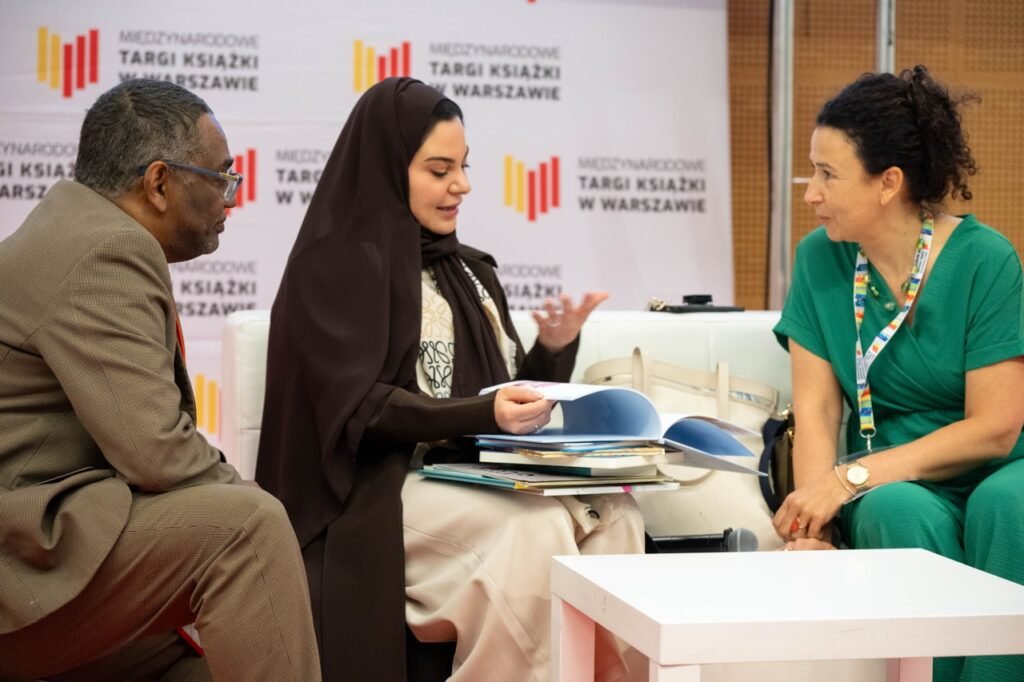

Warsaw, June 01, 2026, Young readers took centre stage at the Warsaw International Book Fair 2026 as Emirati author Nadia Al Najjar and Polish author Paulina Płatkowska led an interactive storytelling session that highlighted the ability of children’s literature to connect cultures, experiences and imaginations across borders.
Held as part of Sharjah’s Guest of Honour programme, the session, titled “Between East and
West”, brought together children and families for a lively exchange of stories inspired by nature,
family, identity and everyday life. Rather than a traditional author talk, the event evolved into a
collaborative reading and storytelling experience that encouraged young participants to engage
directly with both writers.
Al Najjar immediately drew children into the conversation by inviting them to guess where she
had travelled from before introducing Dubai as her home city. Using illustrations and readings
from several of her books, she guided the audience through stories rooted in the UAE’s natural
environment, including Ghafatan, which centres on the ghaf tree, the UAE’s national tree. The
discussion introduced children to the Emirati desert, its climate and landscapes, while
encouraging comparisons between life in the UAE and Poland.
Describing the desert as a defining part of Emirati identity, Al Najjar explained how its extremes
of heat and cold inspire imagination and provide rich material for children’s stories. She also
spoke about Qamar, a story inspired by her family’s experience with pet cats, demonstrating
how ordinary moments can be transformed into meaningful narratives for young readers.
Another title featured a deaf girl and explored the role of sign language and communication
within families. Al Najjar explained how stories can help children understand experiences
different from their own while encouraging empathy and inclusion.

One of the session’s most memorable moments came when Al Najjar asked how many children
enjoyed reading and writing. Hands immediately shot into the air before one young attendee
revealed that she had already written a book of her own, although it had not yet been published.
Al Najjar invited the aspiring young author onto the stage to share her story with the audience.
The girl explained that her book follows a child who wakes up one morning to discover that
everyone around her, including her parents, has disappeared. The spontaneous exchange
transformed the session into a collective storytelling exercise, with children actively contributing
ideas and reflections.
Responding to Al Najjar’s presentation, Płatkowska reflected on the similarities between their
creative journeys. She noted that Qamar reminded her of a cat she cares for at home and
revealed that the first book she wrote was also centred on a tree, creating an unexpected
connection with Ghafatan.
Płatkowska also spoke about the influence of nature on her work, describing plants and forests
as a constant source of inspiration. Living in a home surrounded by woodland, she explained
that the natural world often becomes a central character in her stories rather than simply a
backdrop.
Reflecting on her beginnings as a writer, Płatkowska revealed that her daughter was the first
reader of her work. Many of her stories, she said, grew out of shared family experiences before
eventually finding their way into published books.
The session reflected Sharjah’s wider Guest of Honour programme at the Warsaw International
Book Fair, which uses literature, dialogue and creative exchange to build cultural connections
between the Arab world and Europe while encouraging young readers to see stories as a
shared space for discovery and imagination.

CAPITALS, June 1, 2026 : Gold prices edged lower on Monday after reaching their highest levels in two weeks.

Spot gold fell 0.4 percent to US$4,518.09 per ounce as of 03:06 GMT, after hitting a two-week high in the previous session. US gold futures for August delivery declined 1 percent to US$4,548.90.

Spot silver rose 0.4 percent to US$75.58 per ounce, platinum gained 1.1 percent to US$1,937.30, and palladium advanced 1.2 percent to US$1,370.50.

Dubai , June 1 , 2026 : Dubai’s Roads and Transport Authority (RTA) generated AED 5.3 billion
in revenue through digital channels in 2025, marking a 20.6% increase
compared to 2024. The performance underscores the accelerated
adoption of digital services and enhanced efficiency across RTA’s
ecosystem.
Transactions completed through digital channels exceeded 628 million,
a 13% rise. RTA offers customers 105 digital services through six
channels, reflecting a growing shift towards digital channels as the
preferred way to access and complete services. Digital channel
adoption reached 96%, while the average customer happiness index
stood at 98%.
Smart and Innovative Solutions

His Excellency Mattar Al Tayer, Director General, Chairman of the
Board of Executive Directors of the Roads and Transport Authority
(RTA), stated that RTA’s digital-channel results demonstrate advanced
corporate maturity in adopting digital transformation. RTA is moving
from service digitisation to designing an integrated digital ecosystem
driven by data and artificial intelligence, supporting Dubai’s aspirations
for global leadership in smart cities. He noted that this transformation
reflects the vision of the wise leadership to enhance the quality of life in
Dubai, strengthen the emirate’s global competitiveness, and lead it to
be the world’s smartest city.
Al Tayer added, “RTA is moving ahead with expanding digital services
and adopting the latest artificial intelligence technologies to deliver
outstanding services to customers. RTA is also developing solutions
that enhance the customer experience, support the happiness of
Dubai’s residents and visitors, and reinforce the emirate’s position as a
leading global model for smart cities.”
“The shift to digital channels is a key pillar in advancing the mobility
ecosystem and related services. RTA remains committed to delivering
proactive, seamless services that meet customers’ aspirations and
provide an integrated service experience built on innovation and
collaboration across government entities, enhancing customers’ quality
of life.”
“The next phase will focus on expanding the use of artificial intelligence
and emerging technologies in the design and delivery of services, while
strengthening integration with government digital platforms. This will
help build an advanced digital ecosystem that supports sustainable
growth and keeps pace with rapid global developments in mobility
sector, Al Tayer concluded.
Performance Indicators
This advanced performance marks the culmination of RTA’s digital
transformation journey. RTA achieved 94% on the Digital Maturity
Index, reaching Level 5, the highest level across the Government of
Dubai in 2025, and ranked among the top four government entities.
RTA also scored 83% in the Digital Customer Experience pillar, a 12%
increase on 2024, and achieved 100% in the accessibility assessment
for People of Determination, reflecting RTA’s commitment to providing
inclusive, sustainable digital services aligned with the highest
international standards.

Smart Apps
As part of efforts to enhance services through smart apps, RTA
recorded customer usage of services via smart apps at more than 25%,
a 40% increase year on year. RTA also launched 18 new services
through the RTA Dubai app, designed in response to customer needs
and government directions.
Smart apps continued to gain traction, with active users of the RTA
Dubai app exceeding 1.2 million in 2025. Meanwhile, S’hail app also
introduced a range of services linked to the automated fare collection
system, including nol card services, alongside new features and
enhancements that improved the integrated mobility experience and
reinforced the concept of shared digital channels.
These developments support RTA’s drive to provide a unified and
seamless mobility experience across Dubai’s various transport modes.
They also contributed to higher app usage, with annual visits rising to
68 million, increasing by 144% from 2024. Requests for enquiry and
journey-planning services also rose to 48 million, representing 48%
growth.
RTA continues to develop S’hail app by adding new services and
features, further strengthening the app’s position as the “Mobility in
Dubai” channel and providing customers with a more integrated digital
service.
Website
RTA provides 103 services through the website, with 11 million
transactions completed and a customer happiness index of 96%. RTA
also launched four new digital platforms on the website, including
dedicated platforms for the Road Safety Film Festival Competition,
Delivery Service Excellence Award, Academic Scholarship Programme,
and Dubai Award for Sustainable Transport.
RTA also added three new services: payment of advertising signboard
fines, contesting violations, and the temporary passenger transport
permit service, “Naqel”. RTA also introduced an AI-powered search
feature to make services easier to access and improve the user
experience.
Virtual Assistant “Mahboub”

RTA has significantly enhanced digital services through the virtual
assistant “Mahboub”, adding and improving 15 digital services under
Phase 3 of the Services 360 Plan. This raised the total number of
interactive services to 32, improving the efficiency of the digital
ecosystem and elevating the customer journey.
The enhancement also contributed to greater uptake of digital channels,
with transactions increasing by 20.6% compared with 2024 and revenue
collected rising by 8.1%. This reflects the growing reliance on digital
channels as a primary option for completing services, as well as their
expanding role in supporting financial sustainability and creating added
value for government services.
Smart Kiosks
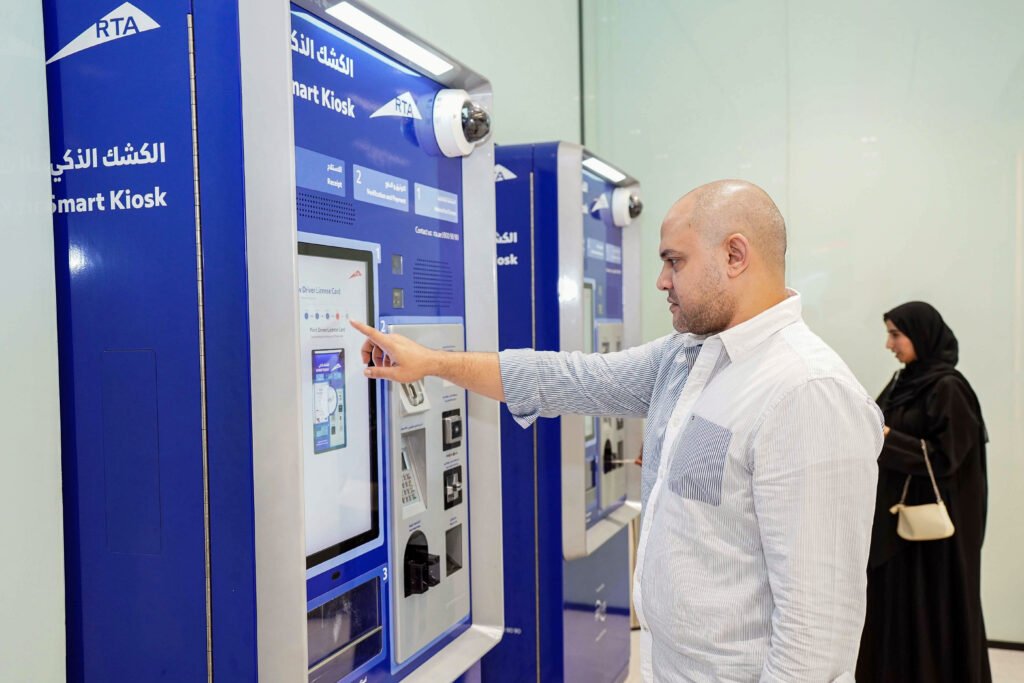
Across alternative service channels, smart kiosks offering 24 services
covering drivers, vehicles and nol witnessed growing uptake.
Transactions increased by 17.3% compared with 2024, surpassing 1
million, while revenue exceeded AED 425 million, a rise by more than
11% year on year. As part of kiosk expansion plans, RTA launched four
new interactive kiosks at Customer Happiness Centres.
WhatsApp
The WhatsApp channel offers 16 services, with revenue from parking
ticket reservations rising to more than AED 21.7 million. RTA also
launched “Madinati” service via Mahboub chatbot on WhatsApp, using
computer vision and generative AI technologies to support the shift
towards proactive smart services.
Enhancing Integration
RTA continued to implement objectives of the Services 360 Policy by
launching and enhancing 48 of 74 digital services across digital
channels, strengthening service integration and simplifying the
customer journey.
As part of Dubai Government’s digital integration, RTA expanded
services across shared digital channels. RTA added 14 services to
S’hail app under the “Mobility in Dubai” channel, enhanced 23 services
on “Dubai Now”, and upgraded 21 services on “Invest in Dubai”. RTA
also made 10 services available through “Visit Dubai” and integrated
RTA services into the “Build in Dubai” platform. These efforts support

5

the drive towards a connected one-government model and enhance the
customer experience across shared digital channels.
Global Awards
RTA continued to strengthen global presence and excellence, winning
two Global Business Tech Awards. The RTA Dubai app won the “Best
Application of Tech – Public Sector” award, while S’hail app won the
“Best Mobile Tech of the Year” award. The achievement reflects RTA’s
leadership in delivering advanced digital services, placing it among
leading global cities such as Singapore, London, Hong Kong and
Sydney.