

Dubai , November 10 , 2026 : An electrifying beachfront celebration featuring Dubai’s top Bollywood DJs, immersive entertainment and festival experiences takes over Surf Club on 1 December, with tickets starting from AED 100.
Dubai’s Bollywood party scene is about to get bigger as AKS Dance Festival returns for its biggest edition yet on Tuesday, 1 December 2026, bringing international talent, spectacular performances and an electrifying beachfront festival experience to Surf Club, Palm Jumeirah.
Taking over Surf Club from 6pm onwards, the third edition promises an evening of non-stop music, entertainment and celebration, bringing together Bollywood fans, friends and families for a festival experience unlike any other, with tickets starting from just AED 100.
Organised by AKS Nights, a name synonymous with Dubai’s Bollywood nightlife for over 16 years, AKS has built more than just a reputation for great parties. It has created a community of Bollywood music lovers who know that an AKS night means great music, incredible energy and unforgettable experiences. Building on that spirit, this year’s festival is set to raise the bar with bigger production, an exciting international headliner, immersive festival zones, live entertainment and an atmosphere that goes far beyond a traditional Bollywood club night.
Making his highly anticipated Dubai debut is international DJ Tej Music Vodka, a rising favourite among Gen Z audiences known for his high energy Bollywood mixes and infectious dancefloor sound. Bringing his signature musical style to Dubai for the first time, he is set to be one of the night’s biggest highlights. Joining him is a powerhouse line-up of Dubai’s most popular Bollywood DJs, including DJ Manoj, DJ Sohail, DJ Buddha, Yog Music and DJ Jose VA, each bringing their own signature sound to keep the energy soaring throughout the evening. From nostalgic Bollywood anthems to the latest chart topping hits and electric dance remixes, the festival promises a musical journey for every Bollywood fan.
This year’s edition will bring together spectacular music, entertainment, lifestyle experiences and beachfront celebrations in one destination. Festivalgoers can look forward to energetic Bollywood dance crews, surprise flash-mob performances and show-stopping production featuring CO2 jets, confetti explosions and exciting moments accompanying the biggest musical drops.
Beyond the main stage, the venue will come alive with interactive pop-ups, glitter and braid stations, themed photo installations, vibrant festival décor and a selection of food and beverage experiences. From dressing up in festival outfits and capturing memorable moments to celebrating with friends and dancing beneath the stars, every element is designed to create a lively, immersive atmosphere that captures the spirit of a true music festival, right here in Dubai.
Set against the stunning backdrop of Palm Jumeirah, AKS Dance Festival is more than a celebration of Bollywood music, it’s a celebration of a community that comes together year after year. From groups planning their festival outfits weeks in advance to friends reuniting on the dance floor and birthdays celebrated under the stars, AKS has become an experience people look forward to sharing. It’s this collective energy, with thousands of people singing and dancing to the same Bollywood anthems, that makes the festival special.
Since its launch in 2024, AKS Dance Festival has steadily grown into one of the region’s most exciting Bollywood music celebrations. Its inaugural edition at Zero Gravity welcomed over 2,500 guests, setting the stage for a successful second edition at Barasti Beach in 2025. Now entering its third year, the festival returns with an expanded line-up of entertainment and experiences, a stunning beachfront setting and enhanced production, promising its most memorable edition yet.
Tickets for AKS Dance Festival start from AED 100 and are available via Platinumlist.
Event Details
Event: AKS Dance Festival
Date: Tuesday, 1 December 2026
Time: 6:00 PM onwards
Venue: Surf Club, West Beach, Palm Jumeirah, Dubai
Tickets: Starting from AED 100 via Platinumlist – https://dubai.platinumlist.net/event-tickets/109551/aks-dance-festival
Month: November 2026
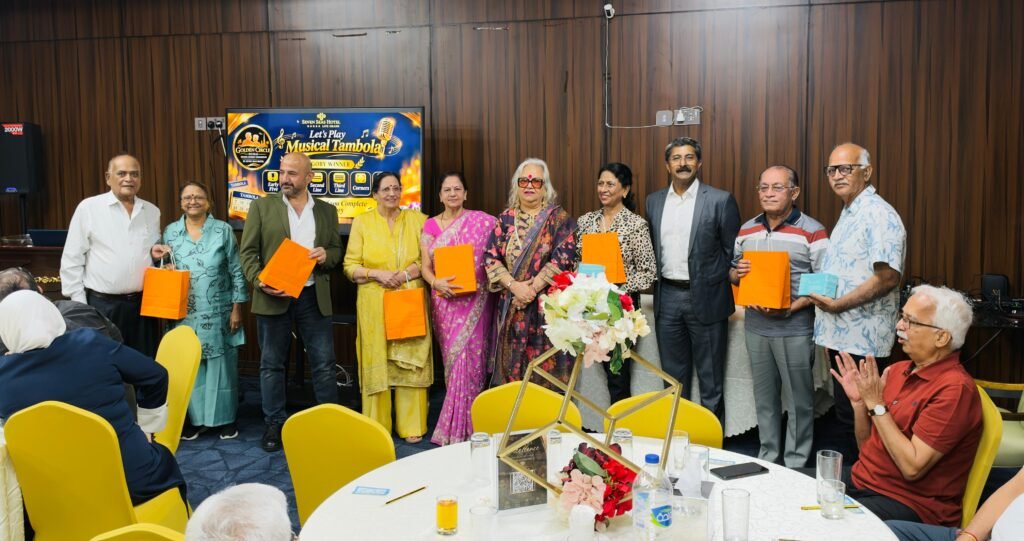
Senior citizens from Indian, Pakistani, Arab, Egyptian and other communities come together for an evening of friendship, entertainment and cultural unity.
Dubai,November 16, 2026 : Seven Seas Hotel, Dubai, successfully hosted the inaugural gathering of its Golden Circle Dubai Senior Citizen Community on 13 November 2026 at the Royal Chambers Ballroom, Al Nahda. The event brought together senior citizens from diverse nationalities for a memorable celebration of friendship, togetherness and community spirit.
The gathering witnessed participation from Indian, Pakistani, Arab, Egyptian and several other communities, reflecting Dubai’s rich multicultural identity. Senior citizens from different backgrounds came together under one roof, sharing laughter, experiences and meaningful conversations in an atmosphere of warmth and belonging.
The evening featured musical entertainment, interactive games, exciting prize-winning activities and refreshments. Guests enthusiastically participated in the celebrations, creating memorable moments while building new friendships. The event demonstrated how social gatherings can promote emotional well-being, active participation and a sense of belonging among older generations.
The occasion was further honoured by the presence of Mrs. Veena Uttam Chandani, a longstanding Dubai resident and associated with Rising Star, who attended as the Guest of Honour. Her participation added significance to the inaugural gathering, which celebrated the wisdom, experiences and contributions of senior citizens to society.
Organised under the theme “Different Journeys, One Community,” Golden Circle Dubai is a special community initiative by Seven Seas Hotel aimed at providing senior citizens with a welcoming platform for social interaction, recreation and companionship. The initiative seeks to bring together people from different nationalities and cultures, encouraging meaningful relationships beyond geographical and generational boundaries.
Following the inaugural gathering, Seven Seas Hotel plans to continue the Golden Circle initiative through fortnightly community events featuring entertainment, recreational activities, interactive sessions and opportunities for social engagement.
Through Golden Circle Dubai, Seven Seas Hotel reinforces its commitment to community engagement and inclusive hospitality, creating a space where senior citizens can connect, celebrate and continue building meaningful friendships.
The successful launch marks the beginning of a promising journey towards building a vibrant multicultural senior citizen community in Dubai, united by the shared values of friendship, happiness and togetherness.
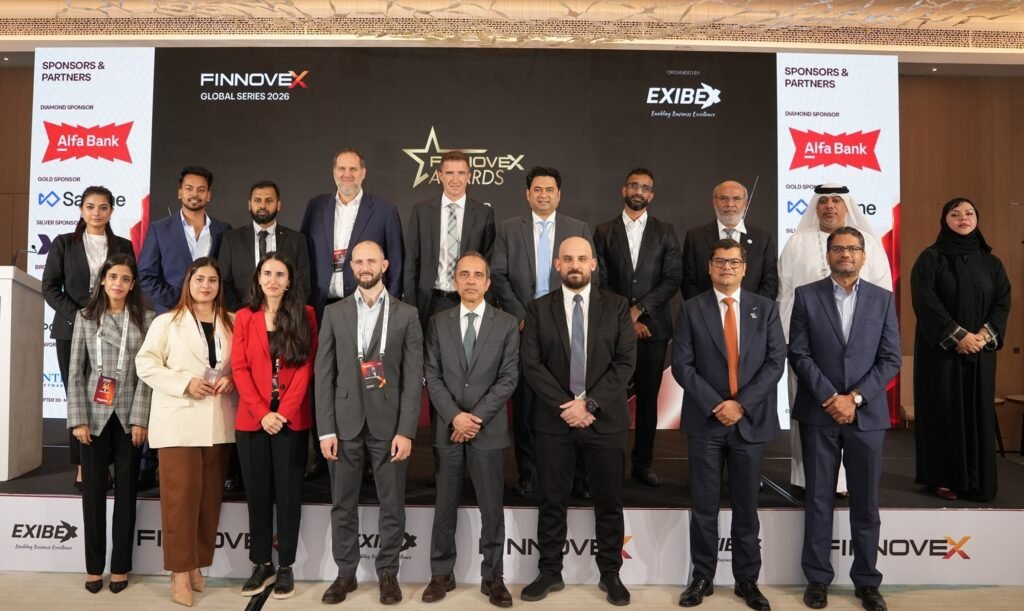
Governance is critical as generative AI scales, and banks should be able to switch model providers without rebuilding their products, experts say
Dubai , November 15, 2026 : Building a connected financial ecosystem for 2027 will require clear regulations, shared accountability and smarter systems, rather than technology alone, experts say at FINNOVEX Middle East Chapter 39 summit, marking the grand finale of the FINNOVEX Global Series 2026 for innovation in the banking and fintech sector.
As financial institutions accelerate the adoption of artificial intelligence (AI), the conference focused on strong governance frameworks, interoperability and the flexibility to switch between AI model providers without rebuilding existing products as that will be critical to managing risks and delivering sustainable value. s
Organised by Exibex, FINNOVEX Middle East featured top thought leaders and decision-makers in the industry, with discussions focusing on creating connected customer value, managing the risks of artificial intelligence, and maintaining trust as payments, credit, data and tokenisation evolve.Organisations need to set clear business goals, put strong oversight in place and simplify their processes, rather than relying on the technology alone.
Dr. Omar Reda, Head of Investment and Risk Management at the UAE Ministry of Finance, shared his insights on the UAE financial ecosystem and the need for agility in a digital economy, and the realities that reshape the region’s financial services sector.
Opening the conference, Kulsum Umme, Project Head at Exibex, said, “We are immensely encouraged by the depth of insights shared and discussed during the two-day conference that witnessed participation by top voices and executives from the industry this year.”
“Over the past eight years, FINNOVEX has grown through the people, partnerships and conversations that have shaped this platform. Chapter 39 celebrates that journey while looking ahead to the opportunities and responsibilities facing our industry. Our new look reflects that progress, and our purpose remains clear: to bring leaders together for meaningful conversations that help shape the future of finance,” she added.
Delivering his keynote address on governing AI in the banking industry, Dmitry Ruzanov, Head of Machine Learning and AI Department at Alfa-Bank, said, “Governance matters the most now with the evolution of generative AI. Banks should be able to switch model providers without rebuilding their products. The challenge now is governing AI at scale, as it becomes successful with the right foundations, common standards, and alignment with measurable business outcomes. Governance is what transforms isolated AI projects into enterprise-wide transformation.”
Maryam Saeed, Global Head of Growth at Sardine AI, agentic risk platform for banking and finance sector worldwide to stop fraud, delivered her keynote address titled “Fighting the Good Fight: Mankind vs. Machine”, exploring the role of people and technology in tackling financial crime.
,Alexis Haessler, Managing Director GCC of BPC, and Ali Nanhi, Managing Director, Commercial Group for GCC, BPC delivered a presentation on how financial institutions can modernise without disruption.
The opening panel titled “The UAE Bank of 2027: From Channels to Connected Customer Value,”discussed open banking, embedded finance, AI adoption and the future of digital banking, featuring representatives from Habib Bank AG Zurich, Al Masraf, HSBC UAE, Vision Bank, Sends and Kuwait International Bank.
Another panel on the topic “AI as a systemic risk”, focused on discussing the regulatory, security and operational challenges of increasingly autonomous systems, featuring leaders from Barclays, National Bank of Fujairah, Emirates Islamic, Ajman Bank, Mashreq and Alfa-Bank. The third discussion addressed “Payments, data intelligence, credit, tokenisation and trust”, sharing perspectives from Al Wathba Insurance, United Arab Bank, RAKBANK, Bank of Sharjah, Posidex Technologies, eSanadand Sends.
Shabaz Ahmed, Executive Director of Exibex, said, “The conversations throughout the summit emphasised that financial institutions are no longer asking whether they should adopt AI, but rather how they can do so responsibly, effectively, and at scale. From governance and customer experience to risk management and innovation, the ideas shared today will help shape the future direction of financial services across the region and beyond.”
The FINNOVEX ME Awards recognised organisations and individuals for excellence in advancing innovation across financial services. Organisational winners included Alfa-Bank (AI Leadership), Abu Dhabi Islamic Bank (AI-Driven Customer Experience), Citibank UAE (AI-Driven Customer Experience), Mashreq (Data-Driven Enterprise), United Arab Bank (Cards Transformation), Liv by Emirates NBD (Digital Banking Innovation), Commercial Bank of Dubai (Open Banking) and First Abu Dhabi Bank (Sustainable Finance Implementation).
Individual honours recognised Hariprasad Chede (CISO of the Year), Rohit Garg (CDO of the Year), Khawer Khaliq (COO of the Year), Sasi Nair (Disruptive Techblazer of the Year) and Gyan Prakash Srivastava (Chief Data Officer 2026) for their contributions to technology, data and financial services leadership.
Alfa-Bank was the Diamond Sponsor of the summit contributing to its AI agenda. Sardine AI, agentic risk platform for banking and finance sector worldwide to stop fraud, was the Gold Sponsor
FINNOVEX ME 2026 Chapter 39 brought the industry together around a shared ambition to buildmore connected financial services while strengthening the governance, resilience and trust needed to sustain them.

Abudhabi, November 15, 2026 : The Environment Agency – Abu Dhabi (EAD) is marking its 30th anniversary as it continues to implement its Strategic Plan (2026–2030), shaping a new era of environmental leadership in Abu Dhabi, drawing on three decades of science-led environmental action and effective partnerships.
Since 1996, EAD has led efforts to protect the emirate’s environment and ensure the sustainability of its natural resources, continuing a legacy pioneered by the late Sheikh Zayed bin Sultan Al Nahyan, Founding Father of the UAE, whose vision established that progress and preservation must go hand in hand.
EAD serves as the emirate’s primary environmental authority, responsible for developing and implementing policies that deliver measurable outcomes across conservation, biodiversity and natural resource management. Working with government entities, the private sector, research institutions, and local and international communities, EAD translates environmental commitments into practical, large-scale impact that advances Abu Dhabi’s sustainability agenda regionally and globally.
These efforts have yielded measurable outcomes. Marine and terrestrial protected areas now cover 20% of Abu Dhabi’s area, while previously threatened species have been successfully saved. Among them is the Arabian Oryx, reclassified by the International Union for Conservation of Nature (IUCN) from Extinct in the Wild in 1972 to Vulnerable in 2011, the first such achievement for any species worldwide.
EAD also operates one of the region’s most advanced air quality monitoring networks, tracking 17 pollutants and collecting 145 million data points annually with 99% accuracy. It has also pioneered the region’s first odour monitoring network.
Marine resources have been restored and managed within scientifically sustainable limits, with the Sustainable Fishing Index reaching 100% in 2025, up from 8% eight years earlier.
This evidence has translated into effective policy action. EAD introduced the region’s first integrated Single-Use Plastic Policy in 2020 and enforced a ban on single-use plastic bags in June 2022, driving a 95% reduction in their use across major retailers.
In 2025, the agency launched the region’s first comprehensive Climate Change Adaptation Plan (2025–2050). That same year, Abu Dhabi was recognised by the United Nations University as the GCC’s first Regional Centre of Expertise on Education for Sustainable Development, reinforcing the emirate’s position as a regional environmental knowledge leader.
Together, these achievements demonstrate the impact of sustained, science-led governance and form the foundation for EAD’s Strategic Plan (2026–2030).
Mohamed Ahmed Al Bowardi, Vice Chairman of the Board and Chairman of the Executive Committee of EAD, said: “Abu Dhabi’s environmental leadership reflects deliberate governance, disciplined execution, and a long-term commitment to uphold the highest standards of accountability. What distinguishes this emirate is how we have chosen to lead, through science, foresight, and the conviction that stewardship of nature is inseparable from enduring prosperity.”
Dr. Shaikha Salem Al Dhaheri, Secretary General of EAD, said, “Since the beginning, everything EAD has done has been focused on the future. Every legislation enacted, every ecosystem restored, and every community empowered was a decision made for future generations. Thirty years of science, policy and partnerships have transformed Abu Dhabi’s environmental landscape and established the emirate as a model of what sustained, evidence-based stewardship can achieve.
“That same spirit now carries us forward. This new chapter is an acceleration, empowered by AI and innovation, defined by climate resilience and bold legislative ambition, and guided by an unwavering commitment to net-zero carbon development and a biodiversity-rich future. Three decades of measurable progress have set a firm foundation for the far-reaching ambitions ahead.”
EAD’s Strategic Plan (2026–2030) is built on decades of evidence and shaped through an intensive engagement process, drawing on more than 170 global benchmarks and the participation of more than 25 leading international experts.
Structured around 9 priorities aligned with government directions and 124 measurable indicators, the strategy tracks environmental outcomes, including cleaner air, healthier seas, restored species and lower emissions.
It advances a vision of Abu Dhabi as a thriving environment, anchored in climate-resilience leadership, biodiversity restoration, environmental circularity, AI-enabled environmental intelligence and community-led behavioural change.
Implementation has been underway since January 2026, with tangible progress across several priority areas and strengthened collaboration with government, industry, academia and community partners.
The 30th anniversary marks a milestone in this journey, giving renewed momentum to the plan’s priorities and reflecting EAD’s longstanding approach of combining strategic ambition with smart, measurable action.
The 2026–2030 strategy positions EAD as both a guardian of the environment and a driver of environmental innovation and policy leadership. It marks a shift from reactive monitoring to predictive and preventative action, integrating artificial intelligence, digital twins, autonomous systems and advanced modelling to anticipate challenges before they arise.
This transformation supports EAD’s ambition to become a fully AI-enabled environmental authority, improving efficiency, accuracy and collaboration across government and key sectors. It aligns with the UAE’s national direction to transition 50% of government services to Agentic AI within two years, while charting EAD’s path towards 100% AI-enabled environmental governance by 2030, supporting Abu Dhabi’s contribution to the UAE’s net-zero goals.
To mark the occasion, EAD launched its “30 Years Protecting Tomorrow” anniversary campaign, a year-long programme of storytelling, milestones and community engagement that celebrates its achievements, honours those who contributed to its journey and invites the community to help shape a shared future. Drawing on archival imagery and first-hand accounts from those who helped shape EAD, the campaign brings the agency’s history to life while highlighting the collective responsibility underpinning its work.

Dubai , November 15 , 2026 : Dubai Chambers organised the ‘Quality Performance Lab’ event to promote a culture of quality and institutional excellence within the business community and enable companies to enhance their performance and operational efficiency through innovative, interactive learning experiences and practical tools.
The event was organised in collaboration with the Chartered Quality Institute (CQI) UAE Network in conjunction with World Quality Week 2026. It aimed to encourage the adoption of international best practices in quality and institutional excellence, strengthen companies’ ability to address operational challenges, enhance performance and competitiveness, and support sustainable business growth.
The event brought together 70 representatives of the business community and professionals specialising in quality, operations, customer experience, strategy, and performance management. Participants engaged in an interactive learning experience that involved analysing a realistic business case, exploring operational challenges, and developing innovative solutions to enhance organisational performance.
Khalid AlJarwan, Executive Vice President of Commercial and Corporate Services at Dubai Chambers, said: “Fostering a culture of quality and institutional excellence is essential to strengthening companies’ competitiveness and ability to achieve sustainable growth. We are committed to helping businesses adopt best practices and strengthen their capabilities through initiatives that offer practical tools to improve operational efficiency and customer experience. These efforts are designed to support companies in adapting to the evolving business environment and strengthen their readiness to capitalise on growth opportunities.”
The event adopted an interactive approach that went beyond traditional lectures and presentations. Working in teams under the guidance of quality experts, participants analysed a realistic business case, examined relevant data and evidence, and identified the root causes of operational challenges. They then developed practical solutions and measurable indicators to assess the impact of improvements.
Activities focused on four interconnected areas: Customer Journey, Process Performance, Quality Culture, and Business Impact. This enabled participants to explore the relationships between these areas and their role in enhancing organisational performance and strengthening companies’ ability to achieve their objectives.
The interactive experience also included an unexpected business scenario that required participating teams to apply analytical, problem-solving, and decision-making skills to develop evidence-based improvement proposals. This helped strengthen their ability to apply quality principles when addressing real challenges within their organisations.
The event highlighted the importance of moving beyond a focus on compliance with standards and requirements towards adopting integrated approaches that enhance customer experience, improve operational efficiency, embed a culture of continuous improvement, and deliver tangible benefits in organisational performance.

Dubai , November 15 , 2026 : The ninth edition of Art Connects Women (ACW) returned to DIFC Gate Village. Held under the patronage of UNESCO and organised by ZeeArts Gallery in collaboration with Dubai Culture and Dubai International Financial Centre (DIFC), this year’s landmark edition brings together 115 women artists representing 115 countries under the theme “Educate to Empower.”
Beyond its global exhibition, the 2026 programme, which concludes 15 November, places a sharp focus on the intersection of private capital, institutional stewardship, and technological innovation in the arts. A centerpiece of the four-day event was the full-day conference on Friday, 13 November 2026, titled “Cultural Investment: Art’s New Era in Sustainable Finance and AI,” which examined how emerging financial models, artificial intelligence, and cross-sector partnerships are reshaping cultural institutions and the wider art economy.
Sheikha Dr. Shamma bint Mohammed bin Khalid Al Nahyan, Chairperson of the Sheikh Mohammed bin Khalid Al Nahyan Cultural and Educational Institutions, served as the guest of honour at the opening ceremony. In her address, she explored the relationship between education and the empowerment of women, the importance of recognizing women’s contributions to artistic and human history, and the challenges facing creativity in the age of artificial intelligence.
She emphasised that education that fosters empowerment goes beyond developing technical skills to include raising women’s awareness of their rights, enabling them to manage their talents, and creating opportunities for their fair representation in artistic institutions and markets.
She stressed that recognizing creativity begins with acknowledging the woman behind it by name, but is only complete when that name receives the recognition and standing it deserves.

Dubai , November 15 , 2026 : The GCC statistical report confirmed that the region’s waste management sector is evolving from municipal services into a promising market for investment, estimated at US$68.3 billion in 2025 and projected to exceed US$104.06 billion by 2031, growing at a compound annual growth rate (CAGR) of 7.29 percent from 2025 to 2031.
The GCC collected 283.5 million metric tonnes of waste in 2024, a 20.4 percent increase from 2023. Meanwhile, treated waste totalled 69.0 million metric tonnes, up 6.2 percent year over year. These figures reflect the expansion of treatment infrastructure, recycling and resource recovery, alongside attractive opportunities for private-sector partnerships, particularly in hazardous industrial and medical waste treatment, material recycling, metal and metal-compound recovery, and used-oil re-refining.
Non-hazardous waste made up 97.1 percent of total collected waste, compared with 2.9 percent for hazardous waste. In terms of treatment, hazardous waste accounted for 11.7 percent of total treated quantities, up 1.8 percentage points from 9.9 percent in 2023, while non-hazardous waste accounted for 88.3 percent. Modern and other technical methods for hazardous waste treatment, including physical and chemical treatment, resale and reuse, accounted for the largest share at 61.1 percent, followed by recycling at 21.6 percent, environmentally sanitary landfilling at 15.5 percent and incineration at 1.9 percent.
The report reaffirmed the region’s leadership in solid waste management. Four GCC countries, the UAE, Qatar, Oman and Kuwait, achieved first place globally with a perfect score of 100 out of 100 in the Sustainable Solid Waste Management index within the global Environmental Performance Index issued by Yale University. Bahrain scored 98.51 and Saudi Arabia scored 92.27 in the assessment covering 180 countries. The UAE recorded the highest collected volume of agricultural waste at 2.4 million tonnes, followed by Kuwait at 0.6 million tonnes.
Collected agricultural waste increased by a cumulative 79.9 percent from 2017 to 2024, while agricultural GDP reached US$39.9 billion. Total collected municipal waste reached 48.8 million metric tonnes in 2024, a cumulative growth of 5 percent over 2017–2024. Household waste accounted for more than 45 percent of total collected municipal waste, while organic waste comprised over 30 percent, ranging from 30.6 percent to 47.0 percent. The quantity of municipal solid waste disposed of or recycled reached 57.8 million tonnes, of which 52.1 million tonnes were landfilled using environmentally sound methods and 5.7 million tonnes were fully recycled.
Collected construction and demolition waste recorded the highest annual growth rate, rising 26.5 percent to 226.6 million metric tonnes in 2024, up from 179.1 million tonnes in 2023, 136.7 million tonnes in 2022 and 109.9 million tonnes in 2021. GDP from construction activities rose from US$130.7 billion in 2021 to US$187.8 billion in 2024, a 43.6 percent increase. Over the same period, the sector’s workforce grew from 3.3 million to 4.7 million, up 42.4 percent. In 2025, the GCC Standardisation Organisation adopted the GCC Standard for Sustainable Buildings, developed by the Gulf Organisation for Research and Development to assess the environmental performance of buildings and infrastructure.
In the industrial sector, hazardous waste generation reached 6.4 million metric tonnes in 2024, representing 77.6 percent of the region’s total hazardous waste generated. Generation grew by 19.5 percent year over year, while collected waste volumes increased by 17.6 percent compared with 2023. This coincided with industrial GDP rising from US$885.4 billion in 2021 to US$1.256 trillion, while the industrial workforce expanded from 5 million to 7.5 million workers. Under the Basel Convention, the GCC encompasses 28 specialised facilities for hazardous industrial waste recycling and metal and metal-compound reclamation, with an average annual growth of 20.1 percent, and 43 accredited facilities for used-oil re-refining and reuse, with an average annual rate of change of 25.2 percent between 2019 and 2024.
Hazardous medical waste generation reached 134,600 metric tonnes in 2024, accounting for 1.6 percent of all hazardous waste generated. Generation rose by 14.3 percent year over year, while the volume of waste collected increased by 14.6 percent compared with 2023. Healthcare sector GDP increased from US$63.1 billion in 2019 to US$83.9 billion in 2024. The number of hospitals grew by 10.6 percent, from 812 to 898 hospitals, and the total healthcare workforce rose from 755,000 to 1.054 million personnel. GCC countries operate 27 dedicated incineration sites for hazardous medical waste, with a combined design capacity of 176,100 metric tonnes, an increase of 67.1 percent from 2019 to 2024. The sector is governed by the GCC Uniform Law for Medical Waste Management and its executive regulations, which regulate eight main types of medical waste through 23 regulatory articles.
In accordance with international environmental treaties and the Basel Convention, exported hazardous waste from GCC states reached 0.8 million metric tonnes in 2024. Of these quantities, 72.6 percent were designated for recycling or metal and metal-compound recovery, while 9.8 percent were directed to recycling or recovering other inorganic materials. GCC states submitted a cumulative 92 national reports to the Basel Convention Secretariat, up from 87 in 2023, reaffirming the integrity of environmental governance and statistical transparency.

Dubai, November 15, 2026 : Dubai’s Roads and Transport Authority (RTA) has launched a five-star system to rate the performance of taxi companies in the emirate. The initiative aims to establish excellence in transport services, raise sector efficiency, improve the customer journey and encourage operators to adopt smart solutions and sustainable practices, thereby reinforcing Dubai’s position as a world-leading city for the quality and efficiency of sustainable, smart urban mobility services.
The system provides an integrated framework for measuring taxi company performance against defined criteria covering service quality, customer satisfaction, traffic safety, operational efficiency, digital transformation and environmental sustainability. It will contribute to a positive competitive environment among operators and encourage them to develop their services and raise them to levels that exceed customer expectations.
Service Quality Governance
His Excellency Mattar Al Tayer, Director General, Chairman of the Board of Executive Directors of the Roads and Transport Authority (RTA) affirmed that launching the five-star system is part of RTA’s approach to developing a people-centred urban transport system built on clear, measurable standards. He said the system is a strategic tool for governing taxi service quality and linking company performance assessments to customer satisfaction, safety, operational efficiency, innovation and sustainability.
Al Tayer said: “The taxi sector is a key component of Dubai’s integrated mobility system, supporting quality of life and the ease of movement of residents and visitors. Through the five-star system, we are moving from measuring service levels to building an integrated system for continuous improvement. It links incentives to performance results and enhances transparency and competitiveness among operators, ensuring reliable, safe and smart services that exceed customer expectations.”
He added: “The system reflects RTA’s drive to instil a culture of excellence in the taxi sector and to turn indicators of customer happiness, safety, sustainability and digital transformation into key drivers of service development. It also supports Dubai’s transition towards smart and sustainable mobility, strengthens the sector’s readiness to keep pace with growing demand for transport services, and consolidates the emirate’s standing among the world’s best cities for the quality and efficiency of urban mobility.”
Incentives and Continuous Improvement
Al Tayer said: “RTA has been keen for the rating to drive development, not merely to measure performance. We have linked rating levels to incentives that encourage outstanding companies to maintain their leadership, while at the same time introducing measures to improve the performance of lower-rated companies. This entrenches the concept of continuous improvement and raises the overall level of service across the sector.”
Based on the assessment results, companies awarded five stars will receive seven taxi plates, along with a certificate and a trophy from RTA, while four-star companies will receive five taxi plates.
Company ratings will be displayed on the smart screens in taxis, and a rating board will be placed at the entrance to each company’s headquarters. Measures aimed at improving performance and raising service levels will be applied to companies rated three stars or fewer.
RTA will update the assessment mechanism periodically to keep pace with global developments, sustain quality levels, enhance Dubai’s competitiveness and consolidate its leadership in urban mobility.
Precise Criteria
The assessment rests on four main pillars including 18 indicators that measure company performance in an integrated manner.
The first pillar, Sustainability, covers the number of green vehicles (electric and hydrogen) in each company; the ratio of drivers to vehicles; the percentage of productive kilometres to total kilometres travelled; and the average trip rating.
The second pillar, Technology, measures the number of e-hail trips out of total trips in the sector, the percentage of trips paid for electronically, the availability of a driver management system within the company, and the implementation rate of the driver working-hours policy.
The third pillar, Accountability, covers serious traffic accidents, quality violations, complaints about reckless driving, customer satisfaction (end-of-trip ratings for e-hail bookings) and driver satisfaction with e-hail.
The fourth pillar, Reliability, covers vehicle availability during peak hours, the number of vehicles activated on the e-hail system during peak hours, drivers’ acceptance rate of e-hail requests, and observations on cleanliness.
The criteria have been designed to provide an accurate, fair and integrated assessment of company performance and to encourage excellence, innovation and positive competition, with a direct impact on the quality of services provided to customers.
Five Companies
It is worth noting that Dubai’s taxi sector comprises five companies: Dubai Taxi Company, Kabi Taxi, National Taxi, Arabia Taxi and Metro Taxi. In 2025, the total number of taxis exceeded 14,346 vehicles, of which 12,380 were electric or hybrid. Taxis completed more than 120 million trips, carrying over 209 million passengers, and the sector accounted for 27% of all users of public transport, shared mobility and taxis in 2025.
RTA continues to reinforce Dubai’s position as a global capital of sustainable, environmentally friendly mobility through an integrated strategy for a full transition to zero-emission public transport by 2050.
Zero-Emission Strategy
RTA is implementing an integrated strategy to achieve a full transition to zero-emission public transport by 2050. It has raised the share of green (hybrid) vehicles in Dubai’s taxi and limousine fleet to more than 72%, while the transition to electric vehicles has reached 19%, exceeding the target set for 2026.
RTA has also drawn up an ambitious operational plan to convert the entire fleet to electric and hydrogen vehicles by 2040. It is expanding the testing and launch of electric autonomous vehicles in cooperation with major global companies, while building advanced infrastructure for fast-charging stations across public parking areas and key transport facilities.
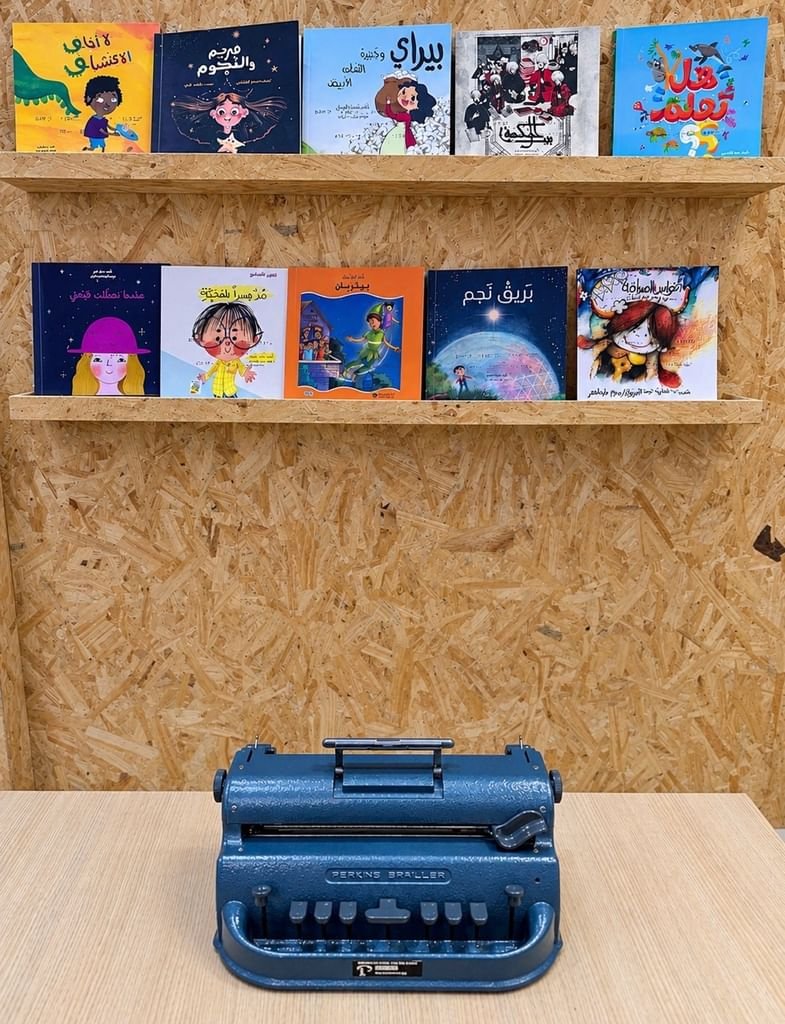
Sharjah , November 15, 2026 : Kalimat Foundation launched 10 new Braille storybooks from six publishing houses for blind and visually impaired children, marking a decade of championing children’s right to read, during its participation in the 45th Sharjah International Book Fair (SIBF 2026).
The collection, developed in partnership with the Zayed Authority for People of Determination under the Ara initiative to broaden the selection of stories and address logistical challenges affecting Braille publications, targets children aged three through nine and older. Five titles come from Kalimat Group and five from Altafarud Design and Publishing Services, Rabie Publishing House, HudHud Publishing and Distribution, Wow for Publishing & Educational Services, and Thaqafa Publishing and Distribution.
Amna Al Mazmi, Director of Kalimat Foundation, said the ten titles represent opportunities for children to choose their own stories, develop confidence and experience the joy of reading independently. She reaffirmed the Foundation’s commitment to removing the barriers that prevent children from accessing books and making accessible publishing the norm.
The Foundation’s stand hosted storytelling and craft workshops led by storyteller Haytham Shokry, including dedicated sessions for blind and visually impaired children, inclusive workshops with their sighted peers and family awareness activities. It also honoured three readers from National Charity Private School – Sharjah for their outstanding participation in its summer reading campaign, “United by Stories”, and featured merchandise created with artist eL Seed, with all proceeds supporting Pledge a Library.
The Foundation participated in two accessible publishing sessions organised by the Emirates Reprographic Rights Management Association (ERRA). The first, at the Sharjah International Publishers Conference, highlighted the UAE’s implementation of the Marrakesh Treaty and collaboration with the World Intellectual Property Organization’s (WIPO) Accessible Books Consortium (ABC) to consider accessibility from the outset and expand accessible Arabic-language content. A roundtable at SIBF introduced the ABC Global Book Service and demonstrated an AI-assisted tool for converting content into accessible formats.
Founded in Sharjah in 2016 by H.H. Sheikha Bodour bint Sultan Al Qasimi, who serves as its Chairperson, Kalimat Foundation provides Arabic-language books and knowledge resources to children facing displacement, disadvantage and visual disabilities through Ara and Pledge a Library, helping preserve their connection with their language and culture.
According to figures reported in October 2026, Pledge a Library has distributed 240 portable libraries and more than 30,000 accessible books, benefiting over 170,000 children in 36 countries.
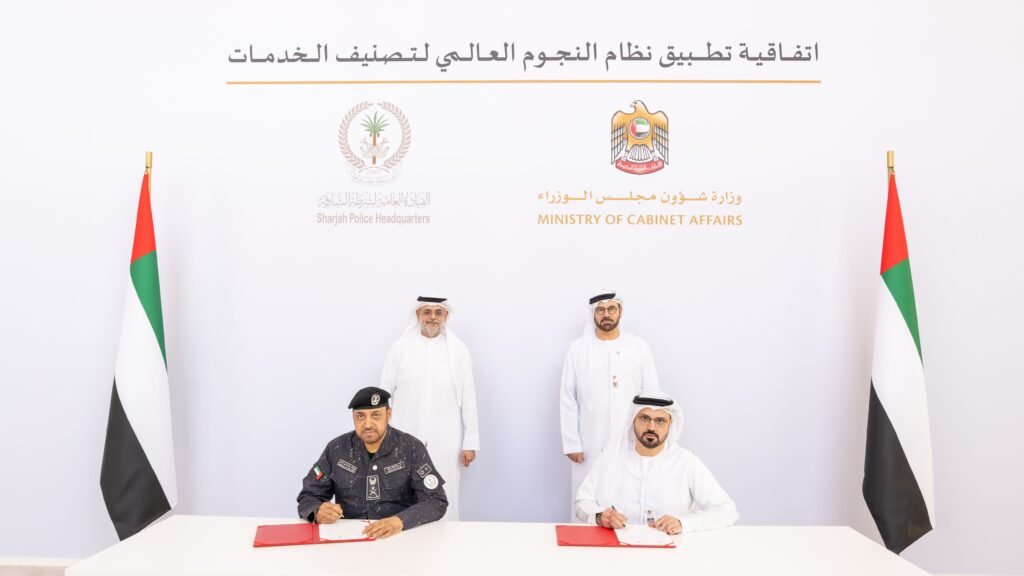
Sharjah , November 11, 2026 : H.H. Sheikh Sultan bin Mohammed bin Sultan Al Qasimi, Crown Prince and Deputy Ruler of Sharjah and Chairman of the Sharjah Executive Council, witnessed the launch of a partnership between the Ministry of Cabinet Affairs and Sharjah Police to strengthen cooperation in implementing the Global Star Rating System for Services. The partnership seeks to facilitate the exchange of knowledge and expertise in developing service delivery channels, thereby improving service quality and efficiency and enhancing the customer experience. The launch took place during the UAE Government Annual Meetings 2026.
The Crown Prince of Sharjah affirmed that advancing the government services system is a key priority of the UAE’s wise leadership, which has established a government model that places people at the forefront and makes quality of life and community happiness central to policymaking and service development. This approach strengthens government institutions’ ability to anticipate customers’ needs, meet their aspirations, and deliver efficient, flexible services.
H.H. Sheikh Sultan added, “The partnership between the Ministry of Cabinet Affairs and the Sharjah Police reflects the integration of national efforts and the pooling of expertise and capabilities to achieve government development objectives.”
H.H. Sheikh Sultan noted that the launch of this partnership as part of the UAE Government Annual Meetings highlights the meetings’ role in aligning visions and priorities, providing a platform for the exchange of expertise and knowledge, and sharing best practices. This contributes to translating national priorities into practical initiatives, developing government work mechanisms, and enhancing the quality and efficiency of services.”
The partnership agreement was signed in the presence of Sheikh Sultan bin Mohammed bin Sultan Al Qasimi and Mohammad Abdullah Al Gergawi, Minister of Cabinet Affairs. The signing was attended by Mohamed bin Taliah, Assistant Minister of Cabinet Affairs for Government Experience Exchange, and Major General Abdullah Mubarak bin Amer, Commander-in-Chief of Sharjah Police.
The Minister of Cabinet Affairs affirmed that the ongoing directives of the UAE’s wise leadership are intended to ensure that the country delivers the world’s best government service experience. He added that partnerships leveraging the expertise of various government entities are essential to achieving continuous improvement and development and enhancing the community’s quality of life.
Al Gergawi added, “The partnership with the Sharjah Police sets an example of strengthening integration across government entities and unifying quality standards in service delivery. The Global Star Rating System for Services measures service quality from the customer’s perspective and their actual experience, providing government entities with a transparent picture of their performance and areas for improvement. The next phase requires a shift towards more proactive and seamless services that use data and artificial intelligence to anticipate customers’ needs and reduce procedures, time and effort. This requires greater integration among government entities and stronger partnerships to achieve the best results.”
The partnership highlights the importance of collaboration between federal and local government entities in developing services. By leveraging shared knowledge and expertise, it aims to improve operational efficiency and foster a culture of continuous improvement. This approach will support the delivery of services that meet customers’ needs and keep pace with their evolving aspirations.
The partnership aims to strengthen cooperation in the exchange of expertise and knowledge relating to the Global Star Rating System for Services and to support the implementation of its standards across Sharjah Police service channels. This collaboration will help improve service delivery practices and enhance the customer experience at its service centres.
Areas of cooperation include developing the skills and capabilities of employees responsible for evaluating and classifying service channels, as well as strengthening their understanding of the system’s standards and implementation mechanisms. These efforts will support more accurate assessments and facilitate the use of assessment results to identify development opportunities and improvement priorities.
The UAE Government launched the Global Star Rating System for Services in 2011 to redefine government service delivery, significantly enhance service efficiency, and align standards with international benchmarks. The programme classifies service channels on a scale of two to seven stars. In 2019, the system was further developed to incorporate new standards reflecting advances in government service delivery and technological transformations across the government work environment.