
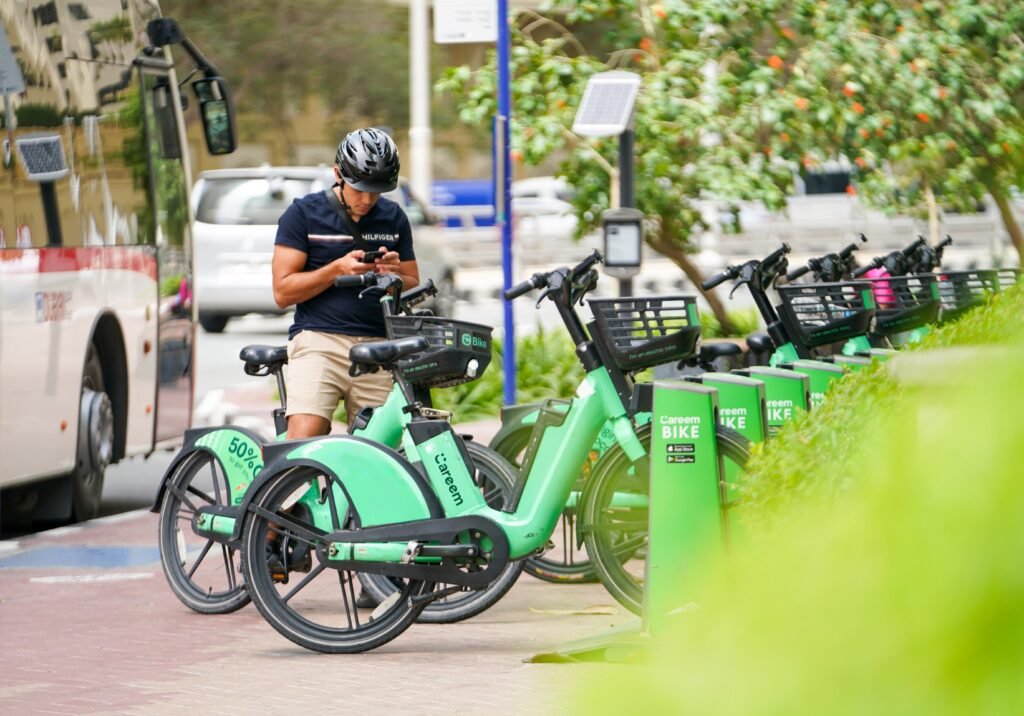
Dubai , April 9 , 2026 : Dubai’s Roads and Transport Authority (RTA), in partnership with
Careem, has announced that more than 10 million cycling trips have been
completed through Careem Bike service since its launch in February 2020
to April 2026. This milestone reflects RTA’s leadership in delivering a safe
and sustainable mobility system, alongside a continued commitment to
encouraging environmentally friendly transport modes and supporting
Dubai’s vision to become a bicycle-friendly city, enhancing community
health and quality of life for residents and visitors.
RTA continues to develop cycling infrastructure through an integrated
network of existing and planned tracks, connecting residential areas with
key destinations and public transport stations. Designed in line with the
highest international standards, these tracks facilitate efficient and
seamless access across the emirate, supporting first- and last-mile
journeys and promoting the use of sustainable individual mobility modes.
To mark this achievement, RTA and Careem honoured the most active
users by awarding complimentary subscriptions to the service and
Careem DineOut vouchers. The most active user was also recognised
after completing nearly 5,000 trips, reflecting Dubai’s growing culture of
active and sustainable mobility.
Careem Bike will offer single-trip passes at a promotional price of AED 9.5
for new users on 11 th and 12 th April using the code BIKE10M, compared to
the standard fare of AED 19. This initiative aims to expand access to
sustainable mobility options and make them more accessible.
Hussain Al Banna, CEO of Traffic and Roads Agency at RTA stated: “The
achievement of more than 10 million trips through Careem Bike service,
used by over one million users, highlights the effectiveness of RTA’s First
and Last-Mile Strategy, which is based on sustainability, shared mobility,
and user safety. Cycling trips also support integration with public transportand promote environmentally responsible mobility behaviours. Since the
launch of the service, Careem Bike trips have contributed to reducing
approximately 6.59 thousand tonnes of carbon dioxide emissions,
equivalent taking approximately 2,084 vehicles off the road.”
Al Banna added: “This achievement reflects the success of Dubai’s plans
and projects to expand the cycling track network and integrate
infrastructure across the emirate. The total length of cycling tracks has
increased from 6 km in 2009 to 636 km by the end of 2025, with plans to
reach 1,000 km by 2030. Infrastructure enhancements in residential areas
and around public transport stations have also contributed to increased
community adoption of cycling as a practical, healthy, and environmentally
friendly mode of transport, resulting in a 23% increase in cycling trips,
from 46.6 million in 2024 to 57.3 million in 2025.”
Bassel Al Nahlaoui, Chief Business Officer at Careem, said: “We are
proud to celebrate the achievement of more than 10 million trips through
Careem Bike service. This milestone, together with the rapid expansion of
the service, reflects the strength of our ongoing partnership with RTA. This
support plays a key role in expanding micro-mobility solutions across
Dubai, ensuring that safe and sustainable short-distance travel options
remain accessible to all.”
Since its launch in 2020, Careem Bike service has established itself as a
key component of Dubai’s public transport ecosystem. The network has
expanded from 71 stations to 210, providing more than 2,000 bicycles and
serving 49 residential communities across the emirate.
The network extends across major residential areas and key destinations,
including Dubai Marina, Jumeirah Beach and Jumeirah Street, Jumeirah
Lake Towers, The Greens, Barsha Heights, Dubai Water Canal, Dubai
Media City, Downtown Dubai, Al Qudra, Al Karama, and Al Mankhool.
Day: April 9, 2026
Dubai , April 9 , 2026 : Sanzen has officially commenced construction on Sukoon by Sanzen, a landmark AED 1.5 billion residential development in Sharjah, marking a bold vote of confidence in the UAE’s real estate sector amid a period of regional caution among developers.
The project, which will deliver 859 villas and townhouses across four phases, is positioned as a new model for community living—one that prioritizes everyday wellbeing rather than traditional leisure-focused design.
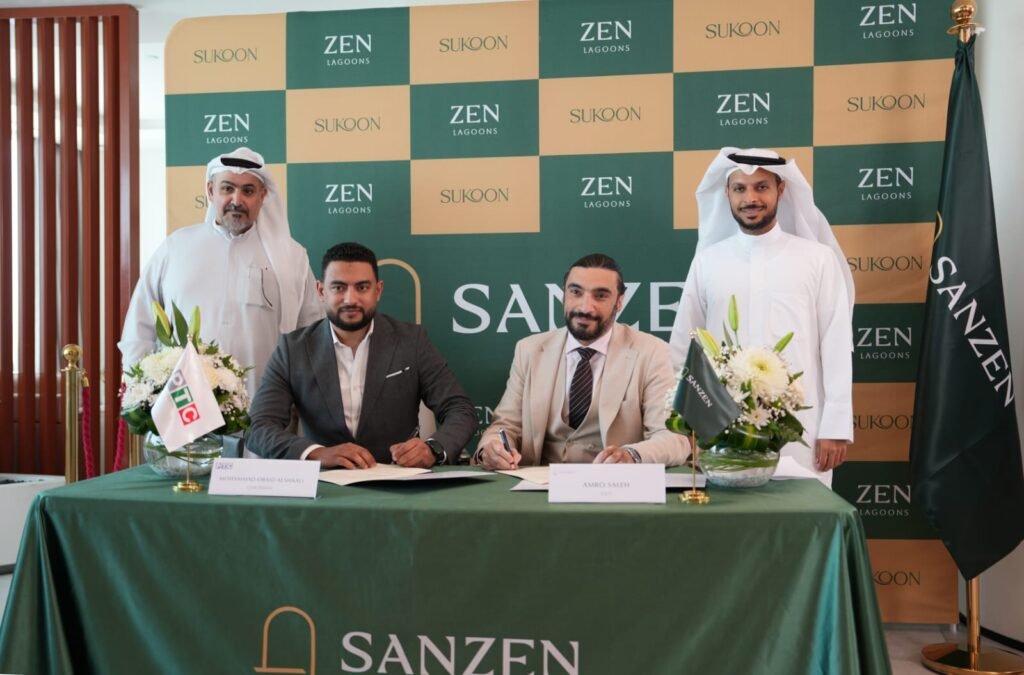
Construction began on April 7, 2026, following a formal signing ceremony held at Sanzen’s headquarters in Festival Tower, Dubai Festival City. The agreement was signed with PTC Contracting in the presence of senior leadership from both organizations and more than 20 media representatives.
Strategic Partnership and Leadership حضور
The ceremony brought together key figures including Abdulaziz Al Sanad, Chairman of Sanzen; Amro Saleh, CEO and Founder of Sanzen; Mohammad Obaid Alshaali, Chairman of PTC Contracting; and Hesham Mustafa, Project Manager at PTC Contracting.
Phase 1 construction has been awarded to PTC Contracting, a long-established Emirati firm with over 50 years of experience delivering projects across Dubai and Sharjah. The collaboration signals the start of a strategic partnership focused on quality, reliability, and long-term value creation.
A Community Built Around Daily Wellbeing
Derived from the Arabic word for “peace” or “calm,” Sukoon introduces a design philosophy centered on integrating rest and recovery into daily life. Instead of a single central clubhouse, the development distributes wellness amenities throughout the community, ensuring that residents are always within walking distance of green spaces, relaxation zones, and wellness facilities.
At the heart of the project lies a 3,000-square-meter lagoon connecting all four residential clusters, designed to encourage daily routines such as walking and outdoor reflection.
Phased Development with Expanding Amenities
Each phase of Sukoon introduces additional lifestyle features:
- Phase 1 (Under Construction): Recovery pavilion, mindfulness spaces, quiet rooms, waterside pod, and outdoor stretching areas
- Phase 2: Infrared sauna, nap pods, reflexology path, family lawns, and community dining spaces
- Phase 3: Cold plunge pools, padel and tennis courts, and outdoor fitness areas
- Phase 4: Sound healing pavilion, sunset viewing point, and communal gathering spaces
The wider development will also include swimming pools, cycling tracks, children’s play areas, nurseries, mosques, retail outlets, and smart home technology integrated across all units.
Strong Market Response and Sales Momentum
Demand for Sukoon has been robust from launch. Phase 1, comprising 241 units, sold out on its launch day—highlighting strong appetite among both local and international buyers.
Building on this momentum, Sanzen is targeting AED 3 billion in sales within its first year. Phase 2 is now open for bookings.
The developer attributes this confidence to the UAE’s economic resilience and historical performance during global downturns. Investors who entered the market during the 2008 financial crisis reportedly achieved returns of around 80%, while those investing during the COVID-19 period saw gains of up to 150%.
Self-Funded Model and Price Stability
Sanzen emphasized its position as a fully self-funded developer, enabling it to absorb fluctuations in construction costs without transferring them to buyers. As part of this commitment, Sukoon property prices are locked for a minimum of six months.
Executive Commentary
Amro Saleh, CEO and Founder of Sanzen, said the launch reflects a deliberate strategy:
“When others pause, we build. The commencement of construction at Sukoon is a defining moment for Sanzen—and a clear statement of confidence in the UAE economy. We are not simply building homes; we are creating a new benchmark for integrated living.”
Hesham Mustafa, Project Manager at PTC Contracting, added:
“Despite current regional conditions, we are moving forward with full confidence. This project reflects our commitment to delivering the highest standards and creating real value for investors and the market.”
Location and Timeline
Sukoon is strategically located in Sharjah with convenient connectivity to Dubai and Ajman via major highways. The full development is scheduled for completion and handover in the second quarter of 2029.

Dubai , April 9 , 2026 : Smartphones are getting more expensive, and the Middle East is firmly part of that story. In the
final quarter of 2025, the global average selling price (ASP) of smartphones pushed past 400
dollars for the first time. 1 In 2026, that line isn't dropping: forecasts suggest prices will keep
edging higher as mid‑ to premium‑tier phones take a bigger share of what people actually buy.
At the same time, global shipments this year are likely to soften rather than surge as those cost
pressures work their way through the market – a reset rather than a collapse, with better
phones, higher prices, and more cautious upgrade cycles 2 .
Why the Middle East Isn’t an Exception
For the Middle East, the outlook for 2026 closely tracks these global patterns. Regional analysis
flags that growth this year is likely to moderate, as higher component and logistics costs push
pricing up. 3 At the same time, figures for the broader region suggest the market should remain
healthy overall 4 , just more particular than before – buyers are still upgrading, but they are more
selective about where each dirham or riyal goes.
The Hidden Cost of Memory and AI
One of the main reasons prices are rising is hidden inside every phone: memory. The DRAM
and NAND chips that make up a big share of a smartphone’s bill of materials are the same
types of components being bought at scale for AI data centers. 5 As AI infrastructure spending
accelerates, analysts warn that these memory markets are tightening, lifting costs for all device
makers and pushing brands in 2026 to focus less on pure volume and more on the mix of
products they sell.
At the same time, today’s phones are expected to handle on‑device AI tasks, run demanding
apps on fast 5G – and in places like the UAE, 5.5G – and drive bright, high‑refresh‑rate OLED
displays, which means using more advanced chipsets and larger memory configurations, adding
even more pressure to prices.
Flagship-Level, Without the Flagship Price
Where things get interesting in 2026 is just below those top price points. A clear pattern has
emerged: many people who were ready to upgrade have been choosing phones that sit one or
two levels below the very highest‑priced flagships, rather than stretching all the way to the top. 7
This is not about basic, bargain devices, but about models that deliver a flagship‑like experience
at a more grounded price. With shipments expected to soften while prices keep rising, this
upper‑mid tier is where much of the realistic upgrade action is likely to stay.
Brands Betting on Specs Over Status
In that upper‑mid space, brands such as HONOR and others have been playing a slightly
different game. They are building out their own ecosystems of phones, tablets, and wearables,
but rather than relying mainly on ecosystem lock‑in or long‑standing prestige, they put the focus
on what you actually get for your money: recent‑generation processors, generous RAM and
storage, large batteries with fast charging, capable camera systems, and quality OLED panels.
Across many current line‑ups, it is common to find a phone from these brands offering more
memory or a larger battery than a base flagship from an entrenched rival at a similar or lower
price point. The same cost pressures that are pushing prices up across the industry still affect
them, but this “spec‑heavy for the price” approach makes their devices feel like stronger value in
a year when every extra dirham or riyal counts.
Are You Paying for the Phone or the Logo?
For Middle East consumers, the implication is not that premium flagships are suddenly a bad
choice. For users who are deeply invested in a particular ecosystem — with watches, laptops,
and subscription services all tied together — paying extra to stay inside that world can still be
rational. What is changing, as global average prices rise and growth cools slightly, is how visible
that trade-off becomes: the logo premium is far clearer when a device that carries it costs
significantly more than another phone with very similar day-to-day capabilities.
Before You Upgrade, Ask This
In a year when prices are rising and upgrades are slowing, it helps to treat a new phone like any
other major expense. Start by asking, at your actual budget, which device gives you the best
balance of camera performance, battery life, and everyday responsiveness – not just the most
familiar name on the shelf. Then look at how much you truly rely on the unique parts of a given
ecosystem, compared with how much of your life now runs through cross‑platform apps like
messaging, streaming, banking, and ride‑hailing.
There is no single “correct” choice, but the momentum in 2026 is clearly towards phones that
deliver most of the flagship experience without the very top‑tier price tag. 9 For buyers in the
Middle East watching prices climb, that is where brands like HONOR, alongside other
value‑focused players, are likely to become more relevant – not as a compromise, but as
options where more of each dirham or riyal goes into the hardware and experience you use
every day, rather than the logo on the back.
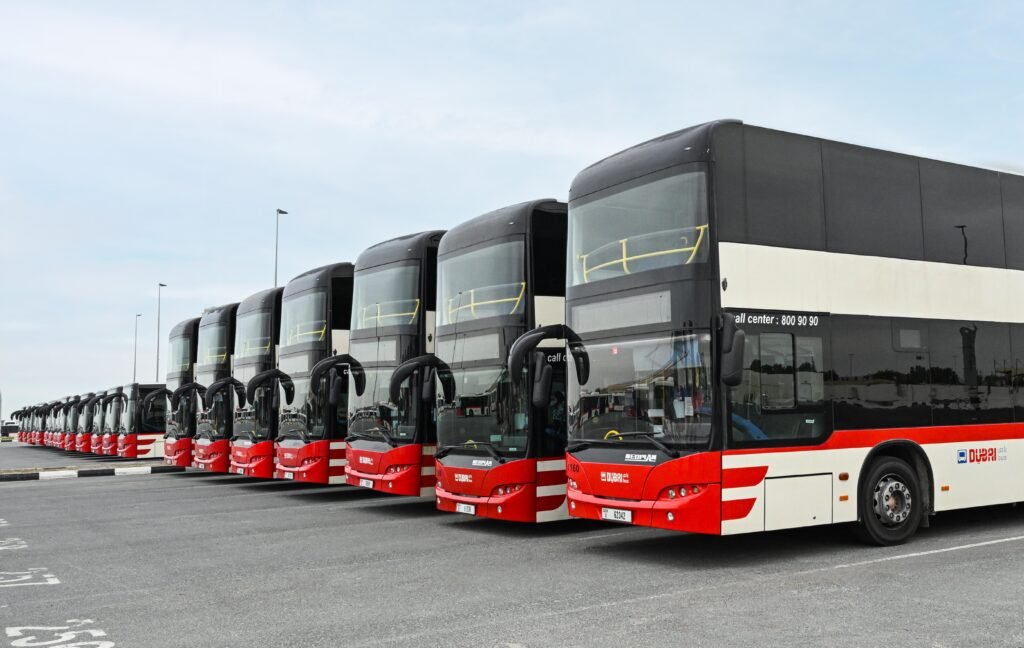
Dubai , April 9 , 2026 : Dubai’s Roads and Transport Authority (RTA) has announced a new
global record, with its public bus fleet achieving a cumulative
operational distance exceeding 2 million km per bus while maintaining
high efficiency over 18 years of uninterrupted service. This
unprecedented milestone further reinforces Dubai’s position as a
leading global hub for innovation and sustainability.
This exceptional achievement reflects the success of RTA’s strategy to
maximise asset utilisation and adopt the highest circular economy
standards, while underscoring the efficiency of preventive and
operational maintenance practices implemented across the bus fleet.
Global Benchmarks
Figures confirm that RTA’s buses have surpassed the 2 million km
threshold, significantly outperforming their counterparts in major global
cities. The highest distances recorded were 1.3 million km in London
and 1.4 million km in Singapore. The fleet has maintained
uninterrupted operations for 18 years, exceeding its planned service
life while sustaining high operational efficiency. In 2025, the buses
recorded an availability rate exceeding 93%, alongside an
exceptionally low fault rate compared with global benchmarks.
Success Story
This achievement goes beyond being a mere figure; it represents a
genuine success story that reflects RTA’s vision of developing a smart
and sustainable public transport system that integrates advanced
technology with operational efficiency. It is the outcome of sustained
efforts by a dedicated professional team committed to the highest
standards of quality and performance, reaffirming Dubai’s steadyprogress towards strengthening its position among the world’s best
cities for quality of life and services.
This record milestone represents a qualitative addition to Dubai’s
distinguished track record of achievements and underscores its
continued commitment to delivering innovative and sustainable public
transport services that enhance customer happiness and support
smart mobility across the emirate.
This achievement carries far-reaching strategic dimensions that
reinforce Dubai’s standing as a smart and sustainable city. Extending
the operational lifespan of buses directly reduces waste associated
with vehicle manufacturing and replacement, supporting Dubai’s
environmental sustainability objectives. It also delivers remarkable
savings in capital expenditure by prolonging asset life and deferring
the need for fleet renewal.
Achieving these performance levels reflects the effectiveness of
preventive maintenance plans and precision maintenance practices
managed with high operational efficiency, setting a benchmark
regionally and globally.