
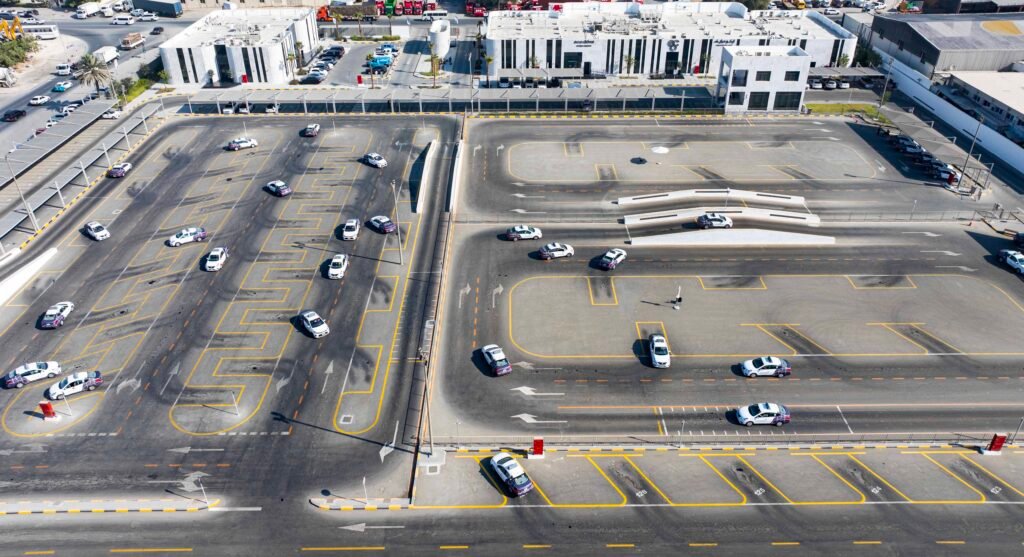
Dubai , September 29, 2026 : Dubai’s Roads and Transport Authority (RTA) continues to advance
its driver licensing services and deploy the latest smart technologies
through the introduction of the next-generation Smart Test
System (STS). The system represents a significant advance in light-
vehicle yard testing, harnessing artificial intelligence, computer
vision and advanced data analytics.
The system is designed to improve the accuracy and objectivity of
assessments, enhance transparency and fairness, and provide a
better customer experience. It also enhances road safety by
monitoring safety-related behaviours and practices during the test
and enabling preventive action whenever potential risks are
detected.
Sultan Al Akraf, Director of Drivers Licensing at the Licensing
Agency, RTA, said: “The next-generation Smart Test System marks
an important step forward in RTA’s smart transformation of driver
licensing services, harnessing advanced technologies to enhance
testing and assessment. The system is designed to ensure that
learner drivers are evaluated against consistent and precise criteria,
minimising inconsistencies in assessment, strengthening customer
confidence in test results and providing a clearer and more
transparent testing experience.”
Al Akraf added: “The system goes beyond automating the
calculation of test results. It provides an integrated framework for
monitoring and analysing learner performance across different
manoeuvres, while presenting recorded errors in a clear visual
format. This enables customers to understand the reasons behind
their results and identify areas for improvement. The smart safety
technologies integrated into the system also enhance learner
protection during the test through AI-powered collision avoidance
and preventive emergency braking systems. These features help
reduce the likelihood of accidents during testing, create a safer and
more controlled testing environment, and place greater emphasis on
addressing risks before they result in accidents.”
Automated, Standardised Assessment
The next-generation system uses advanced AI technologies
integrated into the test vehicle to monitor learner performance,
analyse manoeuvres automatically and in real time, and assess
every element of the test against standardised criteria, with no
human intervention in calculating the results. It also strengthens
governance controls by verifying learner identity through facial
recognition technology, enhancing the reliability of the testing and
assessment process and ensuring that each result is linked to the
correct learner.
The system also monitors compliance with testing and safety
requirements, including mirror and blind-spot checks using smart
cameras, as well as hand positioning on the steering wheel while
manoeuvres are performed. This enables a comprehensive
assessment of the core skills and behaviours essential to safe
driving.
Exceptional Precision
The upgrades include enhanced vehicle tracking within the test yard
using Real-Time Kinematic (RTK) positioning technology, which
delivers positioning accuracy to within two centimetres. This enables
the system to detect errors related to vehicle path, yard
manoeuvres, parking positions and other violations with a high
degree of precision.
The system also features an interactive 3D map that visualises the
vehicle’s route throughout the test and clearly pinpoints where major
and minor errors occurred. This gives customers a clearer and more
precise understanding of their results and the reasons behind them.
Visual Evidence for Test Results
The system allows customers to replay the vehicle’s journey during
the test and review their performance in detail afterwards, with
visual evidence pinpointing where errors occurred and explaining
why they were recorded. This enhances transparency and helps
customers clearly identify areas for improvement.
To further strengthen safety, the preventive automatic braking
system has been further developed for use within test areas,
enabling automatic intervention whenever the system detects a
situation that could result in a collision or pose a potential risk during
the test. Based on a proactive safety approach, the system
identifies hazards and intervenes before a collision occurs, helping
reduce the risk of accidents and safeguard the learner, the vehicle
and the surrounding test environment.
The system is also designed to maintain consistent performance
under varying weather and lighting conditions, by day and night,
reducing the impact of external factors on monitoring and
assessment.
More Transparent and Safer Experience
The upgrades are expected to deliver a range of direct benefits to
customers, including clearer test results and a better understanding
of the reasons for passing or failing. By integrating test results with
the training system, performance data can also be used to identify
individual learner needs, tailor training programmes, and improve
their quality and effectiveness, further strengthening confidence in
the fairness and objectivity of the assessment process.
The system also enhances transparency by presenting errors
visually and in detail, enabling customers to identify areas for
improvement more precisely. At the same time, it enhances safety
during testing, improves service quality and streamlines test-related
procedures.
The initiative forms part of RTA’s continued efforts to harness
artificial intelligence and advanced technologies to further develop
the driver licensing system, improve operational efficiency and
enhance road safety by helping prepare drivers who are more
committed to safe driving practices. It also supports the
sustainability and continuity of operations, in line with Dubai’s drive
to build a smart, safe and sustainable transport system.
Day: September 29, 2026
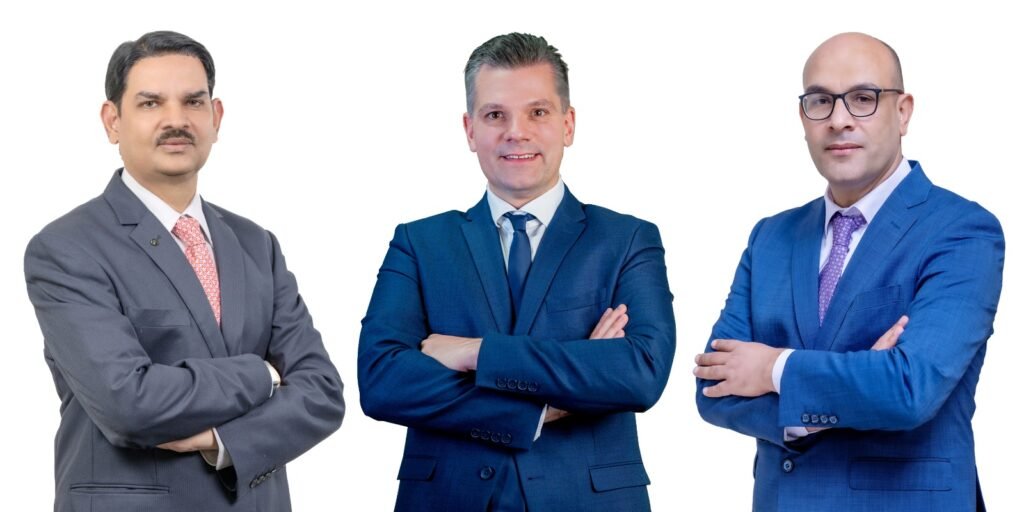
A panel of cardiologists at Medcare Hospitals in Dubai and Sharjah shares three cases in which patients suffered sudden cardiac arrest after heart attack symptoms went unrecognised, underscoring the importance of acting on early warning signs
Dubai , September 29, 2026 : Heart attacks do not necessarily announce themselves with sudden, intense chest discomfort. The genuine danger lies in how people often overlook, misunderstand, or ignore subtle warning signals, wasting critical moments that could be vital for medical intervention. This cautionary message comes from leading cardiologists at Medcare Hospitals in Dubai and Sharjah, who are emphasising this fact as World Heart Day approaches on September 29, educating the public about cardiovascular disease risk factors and effective prevention strategies.
Cardiovascular disease (CVD) stands as the world’s primary cause of mortality. Throughout the UAE, this represents 40% of all deaths . Healthcare professionals across the UAE are noticing this increase largely driven by prevalent risk factors including obesity, diabetes, hypertension, and elevated cholesterol. So many young patients come in with such aggressive cardiac diseases. Young people in their 30s and 40s today are showing the same level of artery damage that doctors used to see only in patients over 70.
The Gulf RACE (Registry of Acute Coronary Events) study revealed that nearly one in three severe heart attack patients in the Middle East reached the hospital more than 12 hours after their symptoms began. The research examined 3,197 patients with STEMI (ST-elevation myocardial infarction), a severe type of heart attack caused by a complete blockage of a coronary artery, across 65 centres in six Arab countries and found that 929 patients (30%) reached the hospital after this critical window.
Dr. Jan Niclas Strickling, Specialist Interventional Cardiologist at Medcare Hospital Al Safa, warned that heart attack symptoms can be mild or confusing for patients, and sometimes initial tests don’t flag them as urgent. “Heart attack symptoms, particularly in the early stages, can be subtle and are very often mistaken for indigestion or reflux.”
He shared the case of a 44-year-old UAE resident, named Godfrey, who experienced days of chest discomfort that he thought were due to indigestion and eventually ended up in the emergency room of the hospital after a sudden cardiac arrest. Diagnosing a 99% blockage in one of the main arteries of his heart, doctors proceeded within minutes to restart his heart and restore blood flow.
“This case is a classic example and an important reminder that heart attack symptoms can closely mimic common digestive complaints, and that timely evaluation can be the difference between life and death. The warning signs may come before the crisis, but too many people dismiss them, delay seeking care, and lose the opportunity for timely intervention,” warned Dr. Strickling.
“I had a history of elevated cholesterol and took medication for approximately two to three months. I noticed some chest discomfort over several days, which I dismissed as stress-related or a digestive issue. When the intermittent chest pain persisted for three days, something I initially thought might be acid reflux, I decided to have this checked at a nearby clinic. My tests, including an ECG and troponin screening, came back normal,” said Godfrey.
“The day after my clinic visit, I was scheduled for a treadmill stress test, but I suddenly developed severe chest pain at rest and immediately headed to Medcare Hospital Al Safa’s emergency room. When the intense pain occurred that day, I understood that something was genuinely wrong. I am deeply grateful for how quickly the medical team at the hospital responded. Now that I have had time to reflect, I recognise that I should have sought emergency care immediately when the pain first started, rather than trying to wait through it,” he remarked.
“Godfrey’s ECG report on admission showed changes suggestive of reduced blood flow to the heart, and he was diagnosed with an NSTEMI (non-ST-elevation myocardial infarction), a type of heart attack that occurs when blood flow to part of the heart muscle is reduced, usually due to a partial or complete blockage in a coronary artery. While still in the emergency room, Godfrey suddenly became unresponsive and experienced ventricular fibrillation (VF), a life-threatening heart rhythm that prevents the heart from pumping blood effectively. The medical team immediately initiated CPR, and two defibrillator shocks were required to restore a normal rhythm. He was then rushed to the Cath-Lab, where we urgently opened the blocked coronary artery,” explained Dr. Strickling.
Dr. Mohammed Albialy Sulieman, Consultant Interventional Cardiologist at Medcare Hospital Sharjah, highlighted another factor that can complicate a cardiac arrest beyond diagnosis or timing, depending on the patients’ underlying health conditions.
He cited the case of a 70-year-old Arab man with narrowed blood vessels outside the heart, along with severe peripheral vascular disease (PVD), chronic obstructive pulmonary disease (COPD), diabetes, hypertension, and high cholesterol.
“The patient arrived at the hospital with respiratory distress, which resulted in an insufficient supply of oxygen to tissues and cells that led to his cardiac arrest. The prompt attention and CPR procedure at the hospital helped us save the patient’s life, achieving the return of spontaneous circulation (ROSC),” said Dr. Sulieman.
“But treating his heart attack was only half the battle. His years of vascular disease had blocked off the usual access points to reach his heart, so we had to find another way in before we could even begin the procedure,” he added.
According to Dr. Sulieman, cases like this show that it is not just the heart attack itself that determines how difficult a resuscitation will be. “We got the blockage cleared, and he went on to recover well, with his heart function improving steadily at follow-up.”
Dr. Rupesh Singh, Specialist Cardiologist at Medcare Hospital Sharjah, said that a clear diagnosis doesn’t guarantee safe passage to treatment because a cardiac arrest can strike at any point in life. “Awareness, preventive measures and a healthy lifestyle are crucial.”
He recalled the case of a 45-year-old Asian patient who was brought to the emergency department by his friends in a private vehicle after developing sudden, severe upper abdominal pain along with heavy sweating. “The patient had already been diagnosed at a nearby clinic with an acute inferior STEMI, a heart attack affecting the lower wall of the heart. Despite this early, accurate diagnosis, the patient suddenly became unresponsive and collapsed inside the vehicle while being driven to the hospital.”
“The patient’s heart stopped twice in a short time, once before arriving and again right before his procedure. An imaging test revealed that a blood clot had completely blocked a major heart artery. We successfully cleared it, restoring normal blood flow. The patient spent two days in the ICU before being discharged and has since returned to work,” Dr. Singh explained.
The three experts observed that these cases highlight the major risk of misreading heart attack warning signs. Heart attack symptoms can be subtle and are often mistaken for indigestion, reflux, or fatigue. Persistent or recurrent chest discomfort, especially with breathlessness, sweating, or pain radiating to the arm, warrants urgent evaluation, even if the earlier tests come back normal. The warning signs may come before the crisis, but too many people dismiss them and lose the chance for timely intervention.

September 29 , 2026 , 2026 : Luxury home design is increasingly moving beyond aesthetics and functionality, with consumers placing greater value on comfort, relaxation and wellbeing within their everyday spaces. Casa Milano is responding to this evolving demand with the launch of a dedicated Wellness Lounge at the Sheikh Zayed Road showroom in Dubai, creating an experiential space where customers can explore and experience these solutions in a more immersive setting.
The Wellness Lounge offers a curated selection of products across various categories, including bathtubs, wellness spas, showers, shower cubicles, customizable vanities, saunas, and other wellness solutions. The space has been designed to allow customers to see these products within an experiential environment, helping them visualise how individual elements can come together to create a complete wellness space at home.
The move comes as consumers increasingly view the home as a space that supports their lifestyle and wellbeing, rather than simply meeting functional needs. Within this shift, bathrooms are taking on a more significant role, with homeowners showing greater interest in creating private spaces for relaxation and retreat. This has also led to growing interest in features traditionally associated with luxury hospitality and wellness spas, including soaking and freestanding bathtubs, and larger shower experiences and private saunas.
“Consumer expectations have changed significantly. A bathroom is no longer just about functionality; for many customers, it has become a space to unwind, recharge and create a more personal experience at home. We wanted our showroom experience to reflect that change,” said Azhar Sajan, Director, Casa Milano. “The Wellness Lounge allows customers to see these products in context and understand how they can come together to create a space that feels personal to them. It is about experiencing the possibilities rather than simply looking at a product on display.”
Unlike a conventional product display, the Wellness Lounge has been developed around the idea of experiencing products within a complete setting. Customers can explore different solutions, finishes and configurations, while architects and interior designers can use the space to visualise concepts for residential and hospitality projects.
The lounge brings together wellness products across multiple categories and international brands like Clea and Wellgen giving visitors the opportunity to explore different designs, configurations and finishes in one setting. The experiential format also allows Casa Milano’s team to understand individual requirements and guide customers towards solutions suited to their homes and projects. The Sheikh Zayed Road launch marks the beginning of a wider rollout for Casa Milano, with the brand planning to introduce the Wellness Lounge concept at other key showrooms across its network.
The launch also held personal significance for Azhar Sajan, taking place on the birthday of his father, Anis Sajan, Vice Chairman of Danube Group. The occasion brought together family, colleagues and members of the Casa Milano team to mark the opening of the new space.
“Launching the Wellness Lounge on my father’s birthday made the occasion particularly meaningful for me. A large part of his journey has been about understanding changing needs and building businesses that respond to them. With Casa Milano, we are looking at the same principle from the perspective of the home, understanding how people want to live today and creating solutions and experiences that evolve with them,” Azhar added.
As wellness continues to become part of the conversation around modern luxury living, Casa Milano’s Wellness Lounge provides customers with a space to explore how these experiences can be incorporated into their own homes, moving from the idea of a traditional bathroom towards a more personalised approach to everyday wellbeing.

With almost 50% of patients in the age-group of 31-50 years, the milestone underscores the prevalence
of cardiovascular disease and the need for intervention among younger, working-age population.
Dubai , September 29, 2026 : Aster Hospital Mankhool, part of Aster DM Healthcare and ranked #4
in the UAE in Newsweek’s World’s Best Hospitals 2026 list, has crossed a significant clinical milestone of
10,000 procedures performed at its Cardiac Catheterization Lab since 2018, a testament to the hospital’s
top-notch Cardiac and Vascular care delivered by UAE’s leading doctors and surgeons. The hospital has
also been recognised among Newsweek’s World’s Best Specialized Hospitals 2027, ranking No. 2 in the
UAE and No. 253 globally for Cardiology.
Patient data from the Cath Lab highlights a notable cardiac health profile among those undergoing
interventions. An analysis of more than 3,500 patients found that over 90% were from the South Asian
region, with Indian nationals accounting for more than 65%, followed by Pakistani and Filipino patients.
Analysis of more than 6,000 patients also showed that cardiac interventions were not limited to older
age groups. More than 35% were aged 41–50 and a further 15–20% were aged 31–40, meaning around
half were between 31 and 50 years of age. Around 30% were aged 51–60, while 10–15% were 60 and
above. The age profile highlights the importance of awareness, prevention and early intervention among
younger populations.
Procedures included coronary angiography and angioplasty, PTCA (opening blocked heart arteries),
STEMI interventions, thrombectomy (removing blood clots), atherectomy (removing hardened plaque),
OCT (detailed imaging of heart arteries), FFR (measuring blood flow through narrowed arteries), ICA
stenting, TAVI/TAVR (minimally invasive heart valve replacement), MitraClip, ICD and pacemaker
implantation, cardiac catheterisation and other complex structural and endovascular interventions.
The Cath Lab has recorded steady activity since its launch in 2018, with an average of more than 1,200
procedures annually from 2019 onwards and overall procedure volumes increasing by approximately 2%
between 2020 and 2025. Around 1,470 procedures were performed last year, while the hospital expects
to reach approximately 1,600 procedures this year.
Dr. Sherbaz Bichu, CEO – Aster Hospitals & Clinics, UAE, Oman & Bahrain, said, “Ten thousand
procedures is more than a milestone – it represents ten thousand moments when timely expertise,
technology and teamwork made a meaningful difference to patients and their families. Our Cath Lab has
operated 24/7 from day one because cardiac emergencies do not wait for office hours, and neither can
we. This achievement reflects the clinical depth we have built at Aster Hospital Mankhool, from
emergency angioplasty to complex interventions such as orbital atherectomy, supported by
multidisciplinary expertise across cardiology, vascular surgery, radiology, neurology, and nephrology.
But our purpose goes beyond treating disease once it becomes critical. We want to move cardiac care
further upstream, strengthening prevention and early intervention while advancing structural heart
therapies and technology-enabled diagnostics that can help our teams make faster, better-informed
decisions. The 10,000-procedure milestone is therefore not an endpoint; it is a foundation for the next
phase of cardiac care, reaching patients earlier, treating them more precisely and continually raising the
standard of care we provide.”
The Cath Lab manages conditions including angina pectoris, chest pain, cardiomyopathy, NSTEMI, STEMI
and unstable angina, with teams undertaking both emergency and elective procedures through
minimally invasive, catheter-based techniques.
More than 60% of the 10,000 procedures have been performed by Dr. Naveed Ahmed, Head of Cardiac
Services, Aster Hospitals & Clinics, UAE, who has undertaken advanced training in Interventional
Cardiology and Structural Heart Interventions, including a fellowship at St. Michael’s Hospital, University
of Toronto, Canada. In 2019, Aster Hospital Mankhool became the second hospital in the UAE to
perform an orbital atherectomy procedure, supporting treatment of heavily calcified coronary arteries
that can be challenging to treat using conventional techniques. While the majority of procedures have
been performed by the Cardiology, Interventional Cardiology and Electrophysiology teams, the Cath Lab
also supports vascular surgery, endovascular surgery, radiology, neurology and nephrology, making it a
multidisciplinary centre for advanced minimally invasive care.
Dr. Naveed Ahmed, Head of Cardiac Services, Aster Hospitals & Clinics, UAE, said, “These 10,000
procedures represent much more than a number; they reflect the trust patients have placed in Aster
and our Cardiology Department over the years. We follow rigorous clinical protocols aligned with
international standards and use advanced technology responsibly, only when clinically necessary and in
the patient’s best interests. At the same time, we remain focused on making quality care accessible and
affordable, supported by the expertise of our multidisciplinary team.”
The milestone comes as minimally invasive, catheter-based procedures play an increasingly important
role in modern cardiac care. According to the latest European Society of Cardiology and European
Association of Percutaneous Cardiovascular Interventions Atlas of Interventional Cardiology, procedures
to open blocked heart arteries accounted for more than 90% of catheter-based cardiovascular
procedures across 50 European countries. The report recorded a median of 2,220 such procedures per
million people, including 509 emergency procedures per million people for patients experiencing a
major heart attack known as STEMI. 12