Dubai , September 27 , 2026 : In line with the directives of the wise leadership to accelerate the
adoption of autonomous mobility technologies and strengthen Dubai's
readiness for future mobility solutions, Dubai's Roads and Transport
Authority (RTA), in collaboration with the Dubai Integrated Economic
Zones Authority (DIEZ), has inaugurated Dubai Mobility Labs — the
smartest integrated ground-testing of its kind in the Middle East,
dedicated to testing autonomous and future mobility technologies.
The project reflects the leadership's vision to position Dubai as a global
hub for developing, testing and certifying the latest mobility systems,
while providing a pioneering environment that attracts companies,
developers, research institutions and specialised talent. It also
contributes to accelerating the transition of innovative technologies from
development and testing to real-world and commercial deployment.
Dubai Mobility Labs supports the objectives of the Dubai Smart Self-
Driving Transport Strategy, which aims to convert 25% of all mobility
journeys in the emirate into autonomous trips by 2030. The project
marks a strategic step towards reinforcing Dubai's global leadership in
future mobility and building a safer, smarter and more sustainable
mobility ecosystem — one that enhances quality of life and strengthens
the emirate's competitiveness and future readiness.
Integrated Testing Ecosystem
The Dubai Mobility Labs is in Dubai Silicon Oasis, the specialised
economic zone for Knowledge & Innovation under DIEZ. The facility
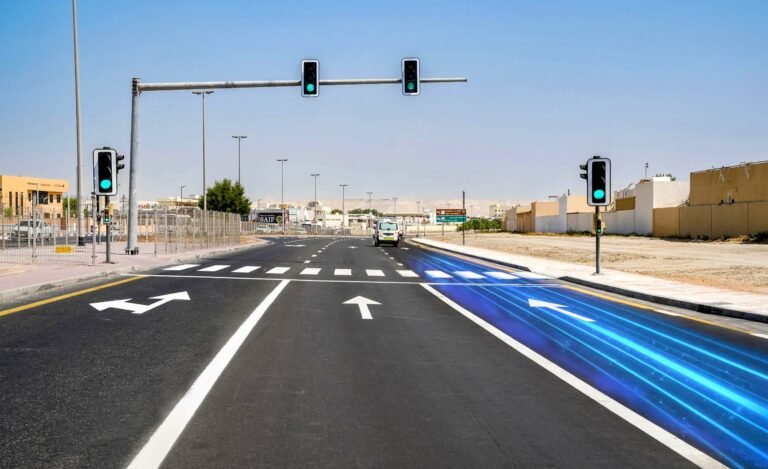
combines dedicated test tracks with a multi-purpose area that provides a
controlled environment simulating a wide range of traffic scenarios,
alongside real-world testing on public roads extending from Dubai
Silicon Oasis to Al Qudra.
This integration allows autonomous vehicles to be assessed under
diverse operating conditions and their ability to respond to changing
traffic and environmental conditions to be tested against the highest
standards of safety and reliability. It provides a comprehensive
ecosystem for testing, validation and certification, helping accelerate
technology development ahead of deployment on the road network.
The testing ecosystem encompasses 248 test scenarios across
controlled environments and public roads. The multi-purpose area alone
supports 195 scenarios: 143 built into its core design and a further 52
added through design enhancements that raised the proving ground's
readiness and efficiency and broadened the range of operational
scenarios it can simulate.
These scenarios cover a wide range of traffic situations encountered by
autonomous vehicles in urban environments, enabling the assessment
of sensing and decision-making systems, interactions with road users,
and responses to changing surrounding conditions. They also allow
vehicle readiness to be verified before vehicles progress to testing and
operation on public roads.
The multi-purpose area includes a variety of test tracks and traffic
features, alongside office and support facilities. It also houses three
supporting light-industrial units equipped for operations and indoor
installations, as well as three 60 kW electric vehicle chargers — meeting
the technical and operational requirements of companies and entities
taking part in testing activities.
Infrastructure for the Future
His Excellency Mattar Al Tayer, Director General, Chairman of the Board
of Executive Directors, Roads and Transport Authority (RTA), said: “The
inauguration of Dubai Mobility Labs is a practical manifestation of the
directives of the wise leadership to reinforce Dubai's leadership in
developing and adopting future technologies and consolidate its position
as a global model for smart and autonomous mobility. As the smartest
integrated ground-testing of its kind in the region, the project provides
strategic infrastructure for testing the latest mobility technologies and
systems in controlled and real-world environments, and for verifying their
safety, efficiency and readiness before deployment on public roads.”
He added: “Dubai Mobility Labs is one of the key pillars supporting
Dubai Smart Self-Driving Transport Strategy, which aims to convert 25%
of all mobility journeys in the emirate into autonomous trips by 2030. It
offers an integrated pathway for developing, testing, validating and
certifying technologies, helping accelerate a safe, orderly transition from
trials to real-world and commercial deployment, while supporting the
readiness of Dubai's infrastructure and its regulatory and technical
ecosystem to accommodate next-generation mobility solutions.”
Al Tayer stressed that the project's strategic importance extends well
beyond establishing a specialised ground-testing: it is about building an
integrated global ecosystem for innovation and development that brings
together vehicle manufacturers, technology developers, start-ups,
research institutions and regulatory authorities. The project will help
position Dubai as a global hub for testing the latest mobility systems and
as a preferred international destination for companies seeking to
develop, test and launch their technologies from Dubai into regional and
global markets.
It will also help attract investment, specialised talent and expertise,
strengthen the knowledge- and innovation-based economy, and
reinforce Dubai's position as an open urban laboratory for designing,
developing and deploying the future of mobility.
Al Tayer explained that integrating controlled testing environments with
operational trials on public roads gives companies and developers the
ability to evaluate their technologies under diverse, real-world conditions,
raises the reliability of test results, and speeds up development and
certification. This, in turn, supports safer, smarter and more sustainable
mobility solutions, a more efficient transport system, smoother traffic
flow, and a better quality of life for residents and visitors.
Innovation-Driven Economy
His Excellency Dr Mohammed Al Zarooni, Executive Chairman of the
Dubai Integrated Economic Zones Authority (DIEZ), said: “Dubai Mobility
Labs embodies the objectives of the Dubai Economic Agenda D33,
which aims to build a globally competitive, knowledge- and innovation-
driven economy and strengthen Dubai’s position as a hub for industries
shaping the future, by providing an integrated environment that enables
global innovators to develop and test autonomous mobility
technologies.”
He added: “Through initiatives of this kind, the Dubai Integrated
Economic Zones Authority continues to support the growth of future
sectors, attract global investment and talent, and strengthen a
knowledge- and innovation-driven economic ecosystem. Dubai Silicon
Oasis provides an integrated environment for developing and testing
advanced technological solutions, supported by smart infrastructure and
a comprehensive ecosystem that helps accelerate the development of
autonomous mobility technologies and their transition from testing to
deployment and operation.”
Real-World Testing
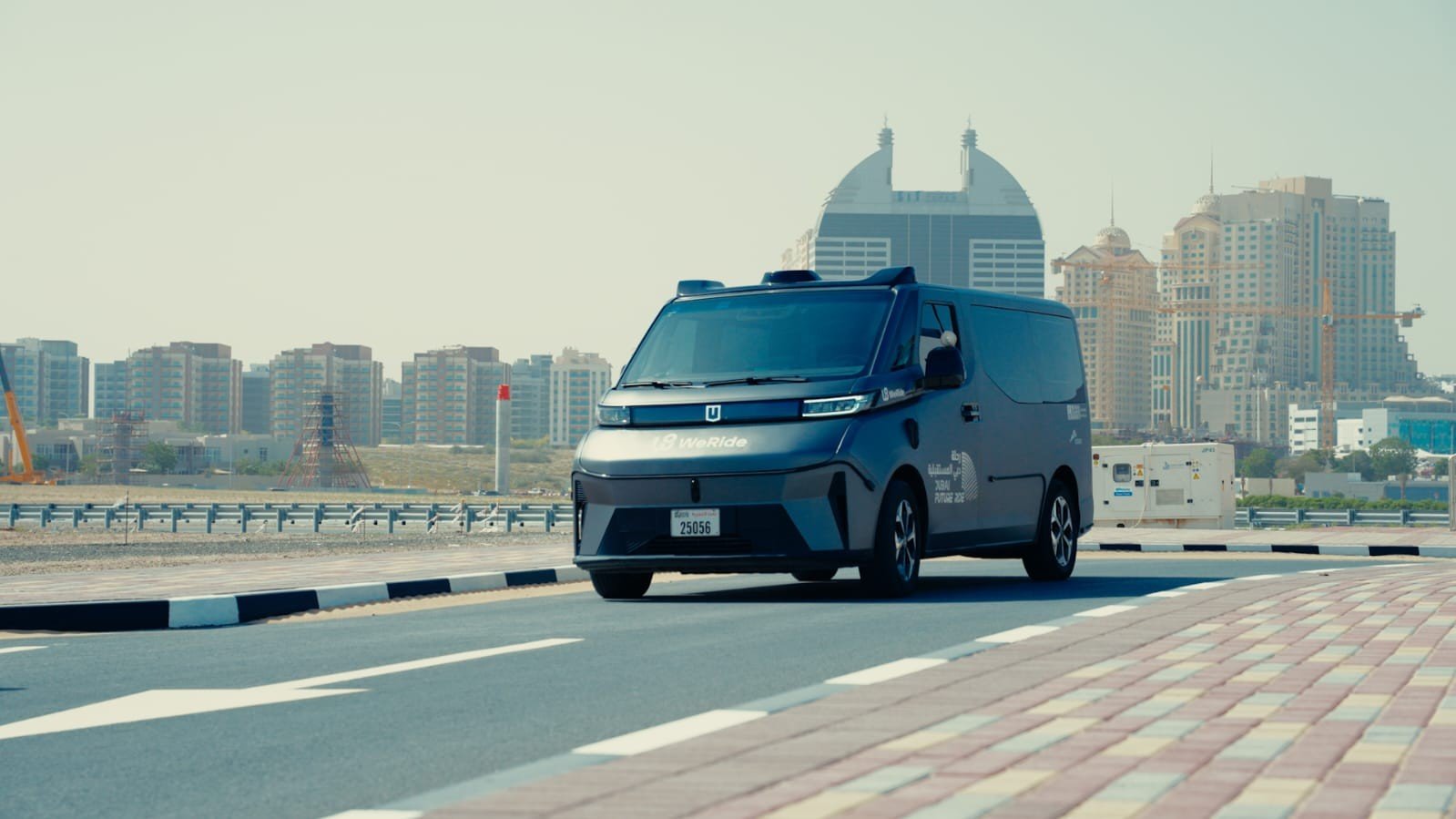
The Dubai Mobility Labs has hosted successful trials of autonomous
driving technologies and vehicles developed by global companies,
including WeRide, Pony.ai and Tesla — demonstrating the readiness of
its facilities to accommodate a wide range of future mobility technologies
and to accelerate their assessment and validation ahead of safe
operation on Dubai's road network.
RTA appointed DEKRA to operate the Dubai Mobility Labs for the first
three years, with responsibility for managing day-to-day operations,
organising testing, overseeing the facilities, and ensuring compliance
with international safety standards and operational best practices. This
strengthens the reliability of test results and reinforces the Labs'
international standing.
Dubai Mobility Labs also opens new avenues for partnership between
government entities, the private sector, and academic and research
institutions. It provides an ecosystem that supports innovation,
development, investment and commercial application — helping position
Dubai as a global hub for future mobility testing, an international
reference point for testing and certifying autonomous mobility
technologies, and a platform from which the latest solutions can be
launched to cities across the region and the world.